Fun on the Range

Flying secret squirrel operations for the U.S. Navy was seldom boring. Most flights were offshore California on the Pacific Missile Test Range. It was not all over water flying, there were Islands that we flew to as well. San Nicolas Island, Santa Cruz, Santa Rosa, Santa Catalina, San Miguel, and San Clemente.The Channel Islands are made up of two more Islands as well, East & West Anacapa and Santa Barbara Island. The Navy “owned” and operated two of the eight Islands, San Nicolas and San Clemente but had a presence on all the rest except Anacapa and Santa Barbara.

I mostly flew out of Naval Air Station Point Mugu, near Oxnard California, but we often had missions to North Island at San Diego, China Lake, Edwards Air Force Base and a couple of other places that I am advised not to talk about. I flew quite a bit in support of the Phalanx Anti Missile system, which in some countries is known as the goal keeper. Its the last line of defense for a ship when the anti missile missiles have let one get by or are overwhelmed. Hovering over the ocean filming the missiles attacking the ship and using high speed cameras to try and capture the Phalanx doing its thing was a little unnerving. When a missile is destroyed parts and pieces fly generally in the direction they were heading. Some of the pieces often made their way to the ship which made landing back on the target ship a priority. Sometimes the helo landing pad was strewn with smoldering debris.

It was all in a days work and nobody was ever hurt, but on at least one occasion the Phalanx failed to acquire the incoming missile and there was a fairly spectacular hole in one side and out the other on the ship. The missiles were not equipped with war heads lest they accidentally hit and send several million dollars of worth of hardware to the bottom. The work that was done on the range was experimental and there was, of course, a lot of experimental aircraft and weapons destroyed. Any boat getting close to San Nicolas Island today can still see the aluminum remains of remote controlled jet aircraft that impacted the cliffs on the approach end to the runway at San Nicolas. I have seen as many as four remotely operated jets in the circuit at San Nicolas being flown by two operators. Making my way through that traffic pattern was never much fun and when we were landing at the same time, I did a very abbreviated cool down, followed by full rotor brake and a dash to the bunker buildings. It was the early days of UAV development and I had no desire to be a curious footnote fatality as the first man killed by a UAV.

One of the more interesting projects I worked on involved an aircraft that flew to rather incredible heights and was the subject of great curiosity by the Russians who stationed so called “fishing trawlers” near the runway departure end of the Island we launched this aircraft from. My job was to fly my civilian helicopter out into the international waters that the Russians were “phishing” in, and try and persuade them to go elsewhere. I had no legal right to get them to move but merely suggested they move to prevent accidentally being struck by an experimental aircraft or weapon. One day, a large trawler I was conversing with on the Marine radio suggested I stop and land on their Helo deck and join him for a cup of tea. The obvious inference being that his Helo deck was empty. I had a helicopter to find and convince to leave the area as well now.

We had three or four ways to get unwanted trawlers to move out of the area. The first involved us calling in some well armed boats called Hostile Methods boats. The name says it all. The second method and my personal favorite was to call in an F-14 that would approach very low and slow and at the last second pull up at full throttle sending a shock wave and mini tsunami up against the trawler.The third and fourth methods were both audible and electrical. If you have ever been scanned by very powerful radar you know it. Even a mild sweep of radar of that nature will zap every filling in your head. When its cranked up, look out! The audible method I can’t talk about and it gives me the willies just thinking about. The methods to discourage all worked eventually, and I would return to the Island, park my little helicopter and wait for the secret aircraft to launch. I can’t say what the aircraft was but I can say that all the pilots I flew out to the Island to fly this aircraft were in the astronaut program at NASA.

Talk about wanting to perform well in front of your peers. Flying in the low scud with two astronauts on board can be a tad intimidating. But maybe I am kidding myself to even call them my peers. It was mostly fun flying all the same and if it had paid anything I might have hung around longer.
I wonder how many times I have said that in my career?
Posted in Contract helicopter pilot, Flying Stories, Helicopter Pilot | Tagged , | Leave a comment

The good and bad

Memory is like the rest of the brain,a very under developed asset.I believe that everything we have done,know or have seen is filed away in our memory. Retrieving that memory is the trick. Speaking of tricks, is it true that most people think back fondly on most past experiences.? I think that is where selective memory comes into play and bless the hearts of all those folks who only remember the happy times ,or so the say. Face it ,if we didn’t have recall of the bad things in life ,we would have burned all our appendages off by now or be reliving the same failed relationships because we had not learned to make better choices.
Maybe scratch that last remark. Obviously some people are attracted to things that they have to know are just bad for themselves. How else do you explain smoking, drug use and well , so many of the other knowingly stupid things some people do to themselves ?
I’ll get down off my soap box and get back to what I set out to do in this blog. I was asked recently to list my employers hiring criteria by the administrator of a helicopter website. It started me thinking of why pilots choose to work where they do and of all the different types of flying that are performed and that I have done. I decided to write a list of the high and low points of each of the types of flying I have done over the past 34 years . I’ll spread my recollections over several blogs and I may not write about all the lowest of the low points. I don’t mind at all remembering Polar Bears playing on the ice but I don’t care if I ever have to think about bodies being carried to the surface through a hole in the ice. You get the idea.
Flight Instruction.
I have never been an ab initio instructor but I have derived great satisfaction from passing along some skills to other pilots.Nothing feels better than hearing that something you said or did helped someone.
Sometimes, unfortunately, you have to decide to cut loose or pass on a pilot for a job you helped train and access them for. When you are a chief pilot as I have been ,the marginal pilots can go either way.I have seen pilots with shaky beginnings grow and excel.I have been one of those pilots!
I have seen other pilots pushed through when they should have been given other duties or additional training. If you think it should be a simple pass/fail choice then you have not spent any time in management. While a fail makes the result seem simple, a pass with reservations is the stuff of nightmares for instructors and chief pilots.
I stop and ask myself this. Would my decision stand up to the scrutiny of investigation? Answering probably or better to the question is a go. But it still can be a very lonely decision.
I have given instruction and received instruction from some of the best. The very best instructor I ever had the benefit of knowing was also my Chief Pilot for the first commercial helicopter contract I ever flew in the United States. That was an incredible bit of good fortune. While I seldom ,if ever, mention names in my blogs ,let me go on record as saying that Pete Gillies at Western Operations was the best helicopter instructor I ever saw. There are probably only about 2,000 other pilots who share my opinion.
When you see a really good instructor ,it inspires you to not only fly better yourself but to try and copy the methods that you have seen. On that basis, Pete has helped more people than he has ever met.
My worst flight instruction event happened many years back.
I had started flying a Hiller 12E that my company had leased from a low time commercial pilot. His ownership of the aircraft was his key to getting some flight experience and I had been tasked with giving him his endorsement on the Hiller.
We butted heads from our first meeting. His flying was sloppy and his attitude seemed to be that it was his helicopter and it didn’t matter what I had to say. Looking back I know now, that his indifference and passive aggressive behavior was a cover for his insecurity.
His wife had arrived on site and she had seen me fly the helicopter prior to her husbands ham handed attempts at takeoffs and landings. I suggested we take our instruction to another location which resulted in him telling me that no further instruction would be required. He wanted to do a low level high speed fly by so his wife could get some movie footage and I vetoed the plan.
I had failed to instruct and the result was that my company sent me to another helicopter. I don’t know by what method the owner/pilot got his endorsement but he was flying it doing forestry spraying a few weeks later. According to reports,after loading his mechanic on board ,they proceeded to do a low level high speed pass up to a tree line and his spectacular pull up resulted in severe hub rock severing the rotor mast and killing both of them on impact.
I had recognized a hazardous attitude that was not merely limited to our personality differences. Two people died and while I don’t hold myself to blame I also know that I am not without blame either.
The good and bad of flight instruction. I have learned more from my failures than my successes.

Posted in Contract helicopter pilot, Flying Stories, Helicopter Pilot | Tagged , , | 3 Comments

We can do better than this

The likelihood that you will make a poor landing is directly proportional to the number and significance of the people witnessing the event.Helicopters can be landed and should be landed smoothly on the exact spot intended.
We have all made those landings that we would have loved to have had a do over, or at least had a valid reason,(excuse) for the landing that occurred.
I watched, what was probably a low time pilot, attempting to land a Robinson R-44 in a gusty cross wind a few months back.Almost everything about the pilots approach to land and landing were wrong. The fact that the landing was completed with the aircraft intact indicated some small measure of ability and good luck.
The landing of choice was a low hover to a slow run on to the grass near the fuel pit.I know very well why this type of landing was chosen and had it been performed with some degree of precision ,I would not have been as alarmed.
Unfortunately, the landing had been a stab at the ground with a sideways drift that looked a lot like the beginning of a dynamic roll over.The landing gear, dry ground and perhaps my quick request for help from the almighty may have prevented an ugly scene. The airport’s fuel tanks and my 22 million dollar helicopter were going to be the first point of contact for the R-44, had it turned itself into a ditch witch, parts slinging piece of junk.
I remember a flight instructor about 30 years ago debriefing a slow run on landing I had performed to cheat a gusty wind that was not working so good for me in the hover.
“A run on landing is for wheeled aircraft and is an emergency procedure for skid equipped helicopters” he told me. I was just starting to form the b in “but” when the instructor cut me off. “Don’t do it”. “Work, at getting the helicopter to the spot you want”.”Your next gusty wind landing may be to a tight pinnacle on a rocky mountain top” “You try that slide it on approach to a landing under those conditions and you’ll be rolling down that mountain in pieces. ” I’ll piss on your grave if you die pulling a stunt like that Keith.” ” Do you understand me?”
I assured my instructor that I had clearly grasped his instruction, noting, that it had not been a subtle point that I might have otherwise missed.
I have never forgotten that advice.
I have done check rides where the reverse of a run on landing was a required maneuver and my reluctance to perform that maneuver almost got me a fail on the check ride.
The FAA at the time, insisted on a running takeoff during the check ride. I can do the maneuver and have, under certain circumstances when flying helicopters with wheels rather than skids. With a skid equipped helicopter I can see no reason other than in some life threatening emergency, to make a running takeoff
I had told the FAA check pilot, that unless he requested the maneuver be performed as an emergency procedure I could not justify a take off under those conditions. My comment was not well received to say the least. The running takeoff was part of the check ride and a refusal was akin to an unsatisfactory result,which would end the check ride. Further more ,the retest would include but not be limited to, this same maneuver being performed satisfactorily or we would be looking at another pink slip.
I attempted an explanation as we sat at idle on the grass. “Sir, there is no condition other than an emergency that would require or allow a pilot to make a running takeoff unless some parameter of weight and density altitude were about to be exceeded beyond the performance limitation of the aircraft”.
In simpler terms, if the helicopter is too damned heavy to hover and take off then, it can not legally get airborne using any other technique such as a running takeoff or perhaps waiting for the wind to exceed translational lift velocity.
We settled on calling the maneuver a coordination exercise, allowing that it was not be used for normal flight.
I don’t know if the maneuver is still required by the FAA or not, on check rides and if it is, it needs to replaced, along with the steep approach to a pinnacle landing and the even more ridiculous max performance take off in a confined area. Beyond ab initio instruction and the required FAA check rides, I have never seen either of these methods of landing and take off used or taught by any of the helicopter companies I have worked at over the past 34 years . Now why is that ?

Posted in Belize, Flying Stories, Helicopter Pilot, helicopter tours | Tagged , , | 9 Comments

Too Risky?

I have a high risk occupation.
My everyday job consists of flying a 9000 horse power helicopter down flaming hillsides dropping enough water or retardant in one load to injure or kill anyone accidentally struck with that volume of liquid.
It is not an entry level flying assignment and for some helicopter pilots its just not for them.Too risky? It depends on how you define and quantify risk.
I some times enjoy flying other types of helicopters on different missions in much the same way that say an airline pilot would spend some weekends flying a glider or an open air biplane.
I was fortunate last winter to spend some time flying passengers to tropical islands and jungle resorts in Belize. Charter or passenger flying, while less hazardous in many respects to firefighting, is certainly not without its risks. The simple fact that you are dealing with people and their unpredictable behavior can ratchet the stress levels up. Some people are a joy to fly and some are nightmares.
One family I flew last winter were from England. The father was an interesting ,successful businessman who was listed as one of the five wealthiest men in Great Britain. The family had arrived in Belize on a sailing yacht that was fantastic in its design and luxury appointments. Like many super yachts it had a fast tender boat along with a powered dingy and the usual assortment of life rafts and other safety gear aboard.
The family when they flew anywhere took multi -engined private jets of the highest quality as you might expect. In some large corporations it is common to have the upper echelon in management fly in separate aircraft to mitigate the unlikely, but possible, devastating loss of the company brain trust in a single aircraft accident.
Countless times I have seen two business jets arrive and unload two people from each corporate jet and watch all four passengers climb into a single engined helicopter or fixed float plane to head out to a resort or lodge. The risk management department of those corporations must have, either not thought that whole process through, or washed their hands of the corporate vacationers when they got them to their time off destination.
It was the same for this wealthy family from England. I loaded everyone after a thorough briefing and off we went in our small single engined helicopter. Most of our initial flight was along the coast or over the barrier reef. My helicopter was a well maintained and appointed aircraft that I had every confidence in. We were equipped with pop out floats and all passengers had or wore life vests depending on our time or distance from the shoreline. The water below us was a comfy 80 degrees Fahrenheit and crystal clear.
Our next flight consisted of a tour of Mayan ruins and required us to fly over some beautiful jungle scenery.
Now a single engined helicopter means that you have just one power unit supplying power to the aircraft as most of you know or can understand. With a twin engined helicopter, while you have a second engine,there is only one common main transmission and other gear boxes, so any serious problem with any of those components and you are making an emergency landing no matter how many engines you have.
This brings us back to the subject of risk. In my regular job I mentioned my typical flying environment and yes it is hazardous to fly on fires. However, in my regular job we have two pilots on board who are fully aware of the risks,well trained, working in unison, clad in protective suits ,flight helmets and focused only on the task at hand. No passengers to distract us or do something unpredictable.
In comparison, my joyful flight with the incredibly wealthy family was over a triple canopy jungle. Could I be guaranteed to make an emergency landing in that environment that would result in no injury to my passengers. What would the result of that however unlikely emergency be to a pilots career if god help me any of those passengers were injured or worse on that routine flight.
As a pilot you have taken all due caution and yet if the worst happens through no fault of your own and a mechanical system fails in your passenger carrying aircraft, you have now entered into a very high risk scenario for you and the people you are responsible for.
A similar mechanical failure resulting in an emergency procedure while firefighting is different. Two pilots who have full knowledge of all or most of the risks involved in their chosen professions will deal with the emergency and live,(hopefully) with what ever the result may be.
My point to all this should be obvious by now.Its not just the perceived risk, but the risk and the result that we have to consider as professional pilots.

Posted in Belize, helicopter firefighting, Helicopter Pilot, helicopter tours, Random rantings, World Travel | Tagged , , , , | 4 Comments

Could you get out after an emergency water landing?

I remember watching the television coverage of the U.S. Air probable emergency ditching in the Hudson River this afternoon . I just recently completed my Helicopter Underwater Egress Training and I got thinking just how bad it would have been for those passengers had the aircraft not remained intact upon landing.
Passengers were seen quickly exiting the over wing exits and that was encouraging. The other exits were opened a bit later it appears and most people had their life jackets on .
Most of us have flown commercially and the safety briefing about exits and the use of life jackets is a pretty routine spiel right?
I’ll give the answers to the following questions at the end of the blog.
Questions:
1. So tell me this? How do you identify the front of the life jacket from the back so that you can put it on correctly?
2. Do you actually know how to open the emergency exit that you are sitting beside and is there a situation for which you would refuse to open the door?
3. You are in aisle seat and the nearest exit door is behind you two rows on your right. Upon landing the plane flips over.What direction would you go in the dark to find that exit?
4. You have landed in the water the exit door near you is open and the water is coming in fairly quickly.The aircraft is sinking. At what point do you take and hold a breath?
5. The emergency exit lighting will illuminate the direction to the emergency exits. Where is the lighting located?
6. Aircraft slides can detach from the aircraft to form a life raft. How will they detach if there is not a crew member to do that procedure?
7. The safety briefing advises not to exit head first, down the safety slide but should you jump out onto the slide or sit down and slide so you don’t hit the ground or water so fast?
8. Finally, your nearest exit may be behind you. Ok, where is the next nearest exit and how many rows is it in front of, or behind you.

Our HUET (helicopter underwater egress training) had us landing in the water flipping upside down and getting out blind folded. Would I have been able to accomplish this emergency exit in the dark waters of the Hudson? What if I was talking or reading instead of looking at the emergency exits and instructions ,when the flight attendants or monitors were doing the briefing. I don’t like my chances.
Our primary instructor on the HUET training says that he always tries for the emergency row seating or as close as possible and in that case when seated in the aircraft ,determines just who he is going to have get by through or over to get to the exit door and open it.
I don’t think he believes most people will get the exit door open on their own.
In the case of this recent U.S. Air ditching I am fairly certain we will find that the crew opened the doors and controlled the exit procedures.

The Answers and feel free to disagree or suggest alternatives.

1.There is no front or back to an airline supplied life jacket. That is not mentioned in the briefing so don’t waste time, put it on and just like they say do NOT inflate the vest inside, when the water comes in you will be stuck on top in your inflated vest. Dead.
2. People are screaming for you to open the exit door beside you after the crash. There is a fire out on the wing that you can see and they can’t . Get moving to the NEXT exit and shout your reason telling anyone within earshot that opening that door with the flames behind it will kill everyone nearby. Move it
3. The exit is two rows behind you on the right. Several people in our class thought that being upside down put the exit on the opposite side. Nope, same place, its just that you are upside down. Think about where you are going before you release that seat belt.
4. Take a breath when the water hits your legs. Many people choose to wait, like you see in the movies but as I have seen its best to grab that air when you know you can. People who wait are often surprised when the water shoots up into their face and all of a sudden they are under without a breath.
5. Lighting is not always on the floor,sometimes the lighting is on the seat side bottoms. Check it out,you’ll see that even some flight attendants refer to emergency floor lighting when its actually on the seats.
6.Slides and slide/rafts can be detached from the girt bar, usually by a two or three step procedures. This may, for example, involve lifting up the flap on the girt bar, and pulling the detach handle. These procedures are usually placarded red on the slide, “For Ditching Use Only”. Once the slide is separated, the slide remains attached to the aircraft by a mooring line. The mooring line will break if the airframe submerges, or can be disconnected with a pre-supplied knife or disconnect handle.( the knife is in the survival bag)
7. Experts say that the aircraft can be emptied 50% faster by jumping on the slide. OK. Wheee!
8.Think of your secondary exit and how far away it is . Counting the rows to the exit may be what gets you there to open it in the dark or the smoke or when your fellow passengers are just clogging the aisle.

I know this wasn’t the cheeriest of blogs but anyone who knows me also knows that I hope for the best but plan for the worst.

And…sure enough the worst or close to it happened, just the other day. here is how it went.

I was in the non flying pilots seat when our aircraft plunged into a muddy lake.
The three of us utilized our HUET training effectively. After hitting, spinning and striking the water violently with the blades, we inverted and sunk to the bottom of a murky lake. A root wad (tree stump) on the bottom of the lake entered through the front window and the pilots door was jammed shut. Water entered quickly since my door/ window on the right hand copilots side had been knocked off at impact I was to find out. 
The pilot had water over him quickly and it was probably a second or two later for me. The crew chief in the back was seated higher and he got a breath unfastened and stood up into an air pocket.The visibility under the water was minimal and I located my seat belt latch and then searched for the door handle for some time, frustrated that I was not locating it after what seemed like a long time. I felt the edge of the outside of the fuselage and the realization that there was no door or handle sunk in quickly. Unlatching my seat belt inverted with my hand grabbing the door frame allowed me to pull myself outside and up to the surface. The cockpit was not yet fully submerged and seeing nobody else outside I looked in an saw a hand and life vest. I pulled the pilot outside with me and asked where our crew chief was?
I had heard him call my name at some point. Winded and injured I had to do a second or two of soul searching looking down into the dark brown jet fuel soaked water. About that time the crew chief came out the back door window and we were all on the sinking inverted cockpit. We gave a thumbs up to a helicopter hovering over head inflated our life vests and swam away from the wreckage as it sank into the water and muck. All of us if I can speak for us are certain that the HUET training is what got us out. A friend who was in the helicopter overhead said “it took you an eternity to get out.” Yes but we got out!
I know the PIC told me he spent too much time on his door and had not got a good breath and was wondering about  the result.
We all did what were trained to do by our instructors and I am certain that it allowed me to remain rational and do what needed to be done.

Posted in Flying Stories, Helicopter Pilot, Random rantings | Tagged , , , | 5 Comments

Flying Seismic

seismology_in_practice

My teeth were chattering in time to the clacking diesel pickups idling behind us in the Motel parking lot. Thirty of us stood backs to the wind waiting for the morning safety meeting to begin. The wind whipped a combination of dry snow and grit across the back of my neck.High desert winter in the dark and the six thirty meeting should have started five minutes ago. I walked back to my truck grabbed my coffee from its warm place and almost climbed in with it.
The bosses were gathering outside as I got back and things were quieting down. Manulito called over to me.
“Ay Keith, Que Paso?” “Mucho pinche frio,amigo”, I answered ,which got a few laughs from my all Spanish speaking coworkers.Our seismic crew were from Texas officially but that basically meant the bosses. The men working the lines were, Mexican, Guatemalan, Salvadoran,Panamanian, Ecuadoran and so on. Illegals, with the appropriate documents that wouldn’t stand up to any real scrutiny from immigration.
It had been a worry for a lot of the men when we worked a job back in south Texas but up here on the Red Desert of Wyoming it was no problemo.
The meeting started with the usual monotone drawl from our boss about being behind ,picking up the pace and paying more attention to geo phone placement in the ground.
To the unsuspecting other Motel guests who had checked in yesterday afternoon and were now privy to the morning briefing it was probably just so much noise they hoped would soon go away.
Todays briefing would include a talk from our new medic freshly hired out of Denver. He apologized for not speaking any Spanish but would talk slow. Oh yes, please do, I thought.
Eyes rolled,men kicked their boots together and the medic spoke about the importance of proper hydration and guarding against hypothermia. I half listened and looked around at the men. Bored and cold, one of the new guys I could not remember his name was entertaining himself by finger flicking the ear of the little Salvadoran standing in front of him. Back off, I thought. This Mexican kid looked like a gang banger from Houston ,up for some quick money and avoiding any outstanding warrants back in the city.
The medic was detailing the color of properly hydrated urine to men who had just now figured out he was talking about the color of their piss.
” So ,your urine should be almost clear or light yellow or light green”, the medic added.
“Green?” one of the men spoke up. “SA ,your pees green and you better check what else is dripping out the end of your dick”.
That got us all laughing and with the boss thanking our new medic for his talk, ended the briefing.
I heard the unmistakable thump of someone getting gut punched. Turning back I could see the new kid doubling over on his way to the ground. His head hit the gravel followed by a soccer kick to the face.
Over in a second and little Carlos from Salvador was grabbed before he could get into one of the trucks.
Our medic had his first customer and after a short explanation by me, Carlitos was back to work.
The kid from Houston would be the head bandaged passenger on the Greyhound bound for the hood.
Our seismic crew of maybe forty men made up a small part of the total effort. Seismic exploration sometimes involved hundreds of people and the size of the area explored could be anything from several hundred acres to several hundred square miles. Helicopters played a role in almost every aspect of remote land operations and my job was working with the layout and trouble shooting crew.
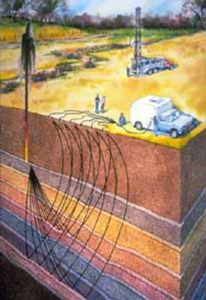
In the simplest terms we were the folks that laid out the geo phone lines on the area to be explored.When you are looking for oil its not by guess and by golly. Oil companies want to have an idea what is under that dirt before they start drilling. Technologies have improved over the years ,so that often oil companies come back into areas with known oil reserves, to take a new “look” under the ground.
To the men I supported and flew around it was even more simple than that. Every day the layout crew would have a forced march through the frozen mesquite covered ground of southern Wyoming. Six miles out and six miles back on average, at 6,000′ with temperatures well below freezing and the relentless wind never let up. If it wasn’t wind across the desert it was wind from my helicopter blowing down from a hundred feet above.
Walking from one pin flag to another hammered into the hard ground the crew would reach one of the hundreds of bags I had flown out ahead of them on the line. In each large vinyl bag were cables to be set out and hooked up to boxes and geo phones that were stomped into the hard surface, The geo phones were like tent spikes attached to cables that fed their sensor information to the antenna equipped boxes.The boxes would relay their under ground sensing information back to the recorder. When enough lines were laid out on the grid ,a series of shock waves created by either explosive charges drilled into the ground or seismic shaker trucks would allow the under ground information to be processed for that area.
With explosive shots taken and information recorded the whole process was then done in reverse.Equipment was picked up and put back in the bags and flown back to staging with the helicopter.

06-11_seismic-moore_fig1

At staging the bags are emptied,equipment checked,cleaned and packed again to be flown out on the new lines. Ad infinitum.
In the next blog, I’ll tell a few seismic stories of days past.

Posted in Contract helicopter pilot, Flying Stories, Helicopter Pilot, RV Travel | Tagged , | 5 Comments

The Burn Over Part II

This had been a stubborn fire.Not much had gone our way and the news from our fire base that we still didn’t have our grocery order hadn’t improved morale.My Helitac crew had been split in two to manage the new hires and probable arsonists.It brought the total ground force to 18 men. I could tell things were not going too smoothly on the ground. The two hand held radios were unusually active. It was all in Cree but there was a tone to Alberts voice that indicated frustration. My last trip back to our main base for fuel, Albert had asked me to pick up a carton of cigarettes. Nobody on our Helitac crew smoked so I knew Albert was asking on behalf on some of the new hires.
” Not enough smoke on the fire for your newbees? “I asked Albert. He just chuckled over the radio,paused with the mike keyed and probably thinking better of it,said nothing.

egor_s-58
Back at our base landing with the S-58 I could see the company engineer had some fuel drums rolled out with barrel slings attached and another few drums stood up with a pump inserted and ready to go.
It would be as quick a turn around as we could handle. The last two trips into the fire had been all equipment. This time we would fuel up, load our extra Bambi water bucket,and sling the drums out to our helispot near the fire. Jim, the engineer would be coming too and I sure appreciated his help. Man handling fuel drums and a Bambi bucket in muskeg ground was no fun by yourself.
Steve, the Ranger came over the radio to tell me that he thought our groceries would be here in a couple of hours. We had been eating canned Spam, Klik and white bread and canned peaches for the past two days.My Helitac crew had said screw the lunch meat and used it for bait to catch some nice Northern Pike,add some rabbit and what looked like roasted venison and the boys were not suffering too badly out at the fire camp.
Jim and I were off to the fire with the all important carton of cigarettes and some extra chain saw gas.
We had enough fuel for 4 hours plus, so our next run back to base would be late afternoon for fuel, groceries and who knows, maybe snuff.
We arrived over our helispot on the fire and after setting the fuel drums over by a growing pile of empty drums I put us back in our wheel marks in the driest spot I had found in the muskeg.
Jim looked around a bit as we sat cooling down the big radial engine. “I know what your thinking Jim”, I said. “This helispot is pretty close to the fire and there is nothing for a firebreak between us and the fire”
“There just isn’t much choice here, its wetter muskeg behind us, a couple of lakes and the hill the fires is running up” “Thats it”
“Well buddy”, Jim said, “that fire shifts this way and you try and remember that I am sitting down here with nothing but fuel drums to keep me company”
“Why don’t you just fly with me Jim; less black flies and another set of eyes is always good”.
“Agreed,Keith”
As the afternoon progressed we had started to get a pretty good line around the fire and the close proximity of a large lake near my helispot was allowing me to get a lot of water where Albert and the boys needed it. At least I figured it was where the crew needed the water. They never asked for any drops. I went about my business and they went about theirs. An occasional wave or thumbs up was about all I ever saw from Albert or the others after a drop.
Jim and I had decided to do a couple of more drops, grab the last of the fuel and net up all the empty fuel drums for our next run back to the base. The empty drums were starting to crowd our little swampy helispot and I was concerned I was going to blow some into the creek that ran to the lake.
Off to the east I spotted a gray/green line of clouds. A squall line and it was heading our way fast.
“Lets start thinking about Plan “B” Jimmy. “This storm doesn’t have any rain under it and its going to bring a 180 degree wind shift when it gets here.” Forget bringing the drums back it will be too slow going.
I called Albert and told him that we were going to get both our buckets tossed in the ship and throw some fuel on quick. “Did you want me to start hauling your crews over to that rocky point on the other side of the lake, Albert?”
“Nope” came back on the radio.
“Well,you know this squall is gonna send that whole right flank back down the hill to where I am landing and there is nothing but muskeg up to your nuts on the other side of this creek”
“Yaw”, Albert chuckled. “We won’t be goin’ that way,we- are- good”
It was about the longest sentence I had ever heard from Albert. As Jim and I hightailed it for the base I had the old S-58 bent over going fast.
I didn’t like leaving but we were out of fuel. We would turn around as quick as we could and get back.
With the helicopter fueled and some fuel barrels rigged we tossed the last of the groceries on board the S-58 and got going. There was no radio commo between the base and my crew but we had heard a lot of Cree over the radio flying back to the base an hour ago.
I started to worry when we were half way back to the fire. There was a big smoke column coming up and the squall line was well off to the west.As soon as I thought we were close enough I started calling on the radio for Albert,then Ely, Noah and finally, anybody on this frequency? Jim looked over at me and and said, “maybe their busy”
“Busy running for their lives except you can’t go any where in that Black Spruce muskeg”.
“Maybe they went to the creek”.” Well, Jim. that creek will be burning along the sides hot and floating crap coming down from the fire will be choking it”
“Jesus, I should of just taken them outta there and across the lake to that rocky point”
Several more calls on the radio produced no answers and as we overflew the helispot I could see it had burned fast and hot almost down to nothing. There were a few scorched fuel drums and where were the others had they exploded and launched? I was feeling sick.

stony3-fire2
A call came over the radio. Hey, ALA, (my call sign), you lookin for us?
“YES ALBERT, where are you”?
“We are doing some rafting on the lake,oh, and a little swimming too”
Flying over the lake we spotted the missing fuel drums,lashed together with our nets and all tied up with fire hose. Coveralls, tools ,pumps ,hose rolls, clothes,tents and bags sat dry in the middle. Naked, smiling and waving all 18 men were there and Jim and I couldn’t stop laughing as I set our fuel drums down at the new rocky point helispot.
Flying back out to the raft, Albert had his jeans on now and keying the hand held radio, said “do you think your big- wind- machine could blow us over to the point?”
” We would be happy to Albert” ,”Happy to”.

Posted in Contract helicopter pilot, Flying Stories, helicopter firefighting, Helicopter Pilot | Tagged , , , | 8 Comments

The Burn Over

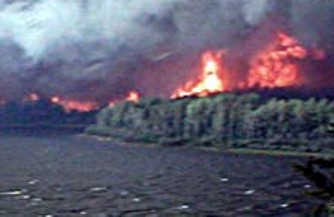
Our Helitac crew’s firefighting efforts and my water drops were not going to be enough to get this wildfire under control. No control today and unless we got some help from Mother Nature, not for a few days.There were no roads anywhere near the fire and other than by boat through interconnecting lakes and rivers it was a flight in by helicopter or float plane to get out here. The boat trip would take about two days from our lakeside fire to the fire base in our little northern Cree Indian village.
Two days is about how long this fire had been going before we found out about it from the locals who walked into our firefighting base. Two days ago I had been talking with Albert and his Helitac crew about getting some matching coveralls for the crew when four other local Crees walked in looking for the Ranger.
Steve, the Ranger, after asking the nature of their business, soon found out that the men were hoping to get a job with the fire crew that would be working the fire, by Morton Lake.
Albert, upon hearing of the fire, called the crew to get ready, while the Ranger just shook his head. Steve looked my way and snorting the words said;
“Keith, get a loaded patrol up with your crew”. Over the radio I received the grid reference for my Forestry map as I ran up the S-58 and launched to what we all knew would be a well established fire.
These early season arson fires, were the inevitable result of a socialist government that encouraged the natives to help themselves, to one of the few work programs offered a native in the north. Firefighting.
Come May, any able bodied native on welfare would be dropped from the welfare roles to seek suitable employment if they had been on welfare for 6 months or more. Many of the natives had been on welfare for the long winter and with Spring and fire season arriving, it was just a matter of time to wait for the bush to dry and “voila”, a fire, and employment.
There was little question that the men who had walked in to tell us of the fire were either its creators or related to someone who was. In fact, everyone was related around here.
The government for a time initiated a policy that no native crews could work a fire in their own district.
Brilliant!
Like I said to one Forestry official after that policy had been quickly canceled, there was one benefit to that ridiculous plan.
“Really, what could that have been Keith”, he asked.”It certainly had not slowed the fire starts, the locals can use a phone and make a deal to start one, if you start one and its expensive to move people around needlessly. So what was the benefit?”
I answered that the government had helped add some depth to a pretty shallow gene pool in some of these villages. A lot of the out of town fire crews were pretty busy servicing more than fire equipment after the fires were done.
” Thank You, for that Keith” he said, turning and shaking his head as he walked away.

Next blog is the Burn Over Part II, or how I thought Albert and the crew were toast.

Posted in Contract helicopter pilot, Flying Stories, helicopter firefighting, Helicopter Pilot | Tagged , , | Leave a comment

Answer the radio

“I’ll bet you have had some frightening experiences?”
It is a question I often get from people who ask about my helicopter firefighting career. “Not too many really”, I say “and I work hard to keep it that way”
A few emergencies, some low visibility scenarios and a couple of close calls with air traffic and ground crews who zigged when they said they would be zagging.
There was a Helitac Crew that I thought were gone. Burned over; maybe dead. That was frightening. I was in no danger of anything; maybe hyperventilation, as I called for them over the radio. It was 1988, mid summer, a busy fire season in the North.
My firefighting crew were from Cumberland House, a small Cree Indian Village. I had a good crew. They knew their business, took care of each other and were easy to work with. They did have one small fault and its a fault shared by most Natives. They don’t talk. Well, they talk Cree. English, if they really have to and no more than necessary. Over the course of a fire season I got pretty good at framing my questions over the radio so that they only required a yes or no answer. I could have cross examined any witness with the radio technique I had developed.
Early in the fire season I got a pretty good indication of how little I was going to hear on the radio from Albert, the Helitac crew boss.
I had flown a load of supplies in the big S-58 to our fire camp down river from the fire we were working. After unloading the gear and groceries with the help of the fire camp cook I was ready to pick up the crew before it got dark. There were no roads this far North, everything was flown in and out on fires.
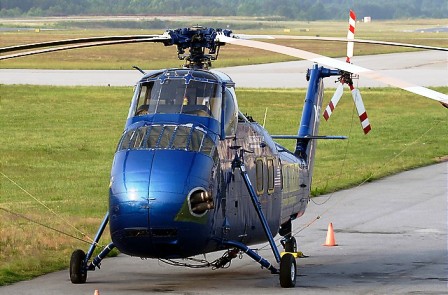
The Sikorsky S-58

0874725
I asked the cook if she needed anything else brought out in the morning?
“I would like one of them fire boys to stay in camp with me. I don’t like them wolves howlin’ around here”.
“The wolves are just chasing down game that is escaping the fire” I said. “They won’t bother you, just bang some pots and pans together”
“I’ll BANG a pan “she answered, looking sideways at the top of my head.
“Be right back with Albert and company” I said, heading for the helicopter.
” Helloooo, Albert, its ALA, (my call sign) heading your way to grab you guys for dinner, are you anywhere near where I set you this morning?”
“No”, came the reply over the radio.
“Ohh Kay then, are you down by the river?”
“Yah”
“Well, I’ll fly along the river and when I get close maybe you could wave me over and uhh, maybe say, here, when I am close?”
“K”
After a couple of minutes and a flight past the fire’s edge, no Albert in sight and, of course, no call.
“Albert, its ALA and I’m guessing I might have missed you, your vigorous waving and perhaps my engine drowned out you saying, HERE !”
To which I eventually hear, “You-went-by-a-minute-ago”.
“I am turning around here Albert and I have an idea. I could hear Ely chuckling in the background on your last transmission, so what I would like you to do is key the mike on that radio as I get close, hold it up to Ely’s head and slap him. I’ll hear Ely yell, then I’ll look down and spot you guys”
The microphone is keyed the whole time and I can hear everyone laughing as I fly back down river. There, under the shade of some Cedars, near a gravel bar is my crew, sitting and smiling through soot blackened faces.
I like these guys.
Next blog, I’ll tell you how I thought I’d lost them.

Posted in Contract helicopter pilot, Flying Stories, helicopter firefighting, Helicopter Pilot | Tagged , , , | Comments Off on Answer the radio

Situation Normal

Another oh dark thirty wake up, for a first light departure. I could never see the urgency in getting people off a ship that would still be there, at say, 07:30, rather than by the dawns early light at 05:45.The U.S. Navy that I was subcontracted to liked to fly people off their old World War II target ships at either the last minute,early,early or at sunset.
Offshore California is often low ceilings and visibility with fog patches to; or just above the water.The Russians and the North Vietnamese trailed our ships in their so called “fishing trawlers”” and I suppose the low weather offered some cover to our not very covert operations.
This particular morning I had preflighted in the dark and launched for a target ship somewhere about 70, or more miles west of the Pacific Missile Test Range base at Port Hueneme,(pronounced whyneemmee) near Ventura, California.While we are dealing with pronunciations, its (Ventoora) not (Venchura).Anyway…
The Navy liked to launch the helicopter and then give us the target ships coordinates on a secret squirrel frequency which was not encrypted, so, was mostly likely listened to, by the Russians.
Inputting the coordinates in the G.P.S. as I scooted along about 300′ over the water I could see that it was going to be about a 38 minute flight if I didn’t have to deviate around fog banks.It was likely I would be slowing or deviating since I could see fog banks looming ahead. Often the fog banks stayed off the deck because of temperature differences between the ocean and the air above. It was a tight squeeze some times and the Navy had pretty good surface radar that could advise me of traffic in the shipping lanes and fishing vessels that might ruin my day if I ended up scooting above the waves @ 50 or so feet. I often did just that and after a few months I became a fairly proficient I.M.C. pilot without actually being rated for I.F.R. flight. Our flying was all visual flight rules but I knew that if I hoped to survive long in this environment , I would need to have some formal instrument flight training and soon.
After about 8 minutes the bored sounding Navy voice on the radio asked how I was progressing. He could no doubt see my zig zag routing as I dodged around the low fog ,slowing and turning as my low level world shrank along with my options. ” Ok, so far and confirm the ship is in clear conditions”. “Affirm” came to the Navy voice.” ” At your 12 on a heading of 276 for 54″. Fifty four nautical miles that could take 27 or 54 minutes or more depending on this dam fog.
Fortunately the next passing fog bank showed higher clouds behind it lifting the ceiling and my spirits.A few seconds later my Navy watcher came back with a question. He wanted to confirm that my helicopter was a six passenger aircraft since the call sign I had given him was for a four passenger helicopter.
“Negative,” I answered this is a four pax ship. “Sir, we have five pax to take off the ship.” “So we will need a larger helicopter”. “Roger that ” I said as I did a 180 degree turn to base. Another trip through the low weather was just a wee bit better as I called my base and advised them I would need a different aircraft.
SNAFU number, too many to bother counting.The Navy and the defense contractors never seemed to be on the same page and this type of mix up was common. Your tax dollars at work.
Outbound to the target ship the weather was improving as it usually does with fog when it gets some sun.
The fog had turned to haze and the target ship now about three miles at my twelve was invisible to me. The Navy paints those things gray for a reason. I called the target ship as I sipped my second coffee of the morning and told them that the G.P.S. showed me about three miles back from the coordinates given.
“More like four and a half” came the voice from the target ship,” but your heading is good”. “Cook wants to know if you might like a western sandwich to go with that coffee” . Affirma… “, I started to say,”Uh, how’d you know I had a coffee”.What else would you have in a styrafoam cup at this hour ?” came the reply.
I know my mouth must have hung open for a few seconds because the voice from the target ship started laughing and added, “if we can see a missile with the cameras at 8 miles and Mach 3 we can surely see your big head at 4 miles and 120 miles an hour.”
It was another minute till I saw the ship. The target ship was on old World War II “Fletcher” Class destroyer that had room enough on the fan tail to land a Bell 206 Jetranger,so with the LongRanger I had, it was a bit tighter. Today the diesel outboard motors they had welded to the stern were sitting up in the stowed position making the landing even tighter but when asked,the ship said they were expecting the smaller helicopter. No problem, it would be a tight landing but the sea state was not too rough and although slightly sideways in the swell it was going to be OK.
Timing the swell was the critical part to the landing and after completing a few dozen landings I had it figured out. Once on deck it was always a little unnerving sitting on the steel deck as the ship moved side to side,fore and aft,up and down. A sideways swell meant that the helicopter often slid a few inches one way or another. Unless it looked like you might really start start sliding, the all clear for loading was given or a visual thumbs up returned and the always eager to get the hell off the ship passengers scurried head low and got in quickly. Hopefully.
The worst case scenario involved baggage and arriving and departing pax who lingered around the open doors shouting back and forth as the helicopter skittered across the deck perilously close to a roll over. Screaming something like, ” Jesus Christ, get in or get clear” usually conveyed the sense of urgency and people reacted accordingly.
Today my two pax loaded quickly,one of them handing me a wax paper wrapped warm sandwich and smiling said ,”we are glad to see you”.
“What about the other three people”? I asked. “Just two of us from General Dynamics” came the response. I manifested their names gave the safety brief and we were off. SNAFU a la Navy. ” I am taking you to San Nicholas Island, correct?” “No , we are going to Naval Air Station Point Mugu on the mainland,” they answered in offset stereo.” “Well,yes you are,I said, but first we will go San Nicholas Island because I fueled for five people and a short trip.” “I have a 10:00 a.m flight that I need to make back to D.C.” came a voice from the back. “Yes sir, when we are fueling at San Nicholas Island please feel free to get out and rebook your flight”
Excuse me while I call the tower for clearance. San Nicholas tower responded with the unpleasant news that they were as the Navy called it.”Walks Off” , or zero zero ,as we say back on dry land. I’ll eat that sandwich now. It was going to be the best part of my morning, so far.

Posted in Flying Stories, Helicopter Pilot | Tagged , , | 1 Comment