Minus 40 with Gale force winds.

Celsius or Fahrenheit? Both thermometer scales meet at that same low point, as if to say that it doesn’t really matter. Its cold, damn cold. Add a 40 mph wind and the wind chill is -85. I mention this little weather tidbit because it was the weather I had on my first day of employment as a commercial pilot.February 1975, Resolute Bay. From the Resolute Bay, website

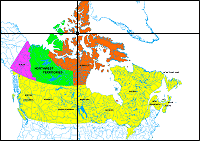
The cross hairs meet in Resolute.

From The Resolute Bay Website:“Resolute is not the end of the world, but you can see it from here…”
Resolute Bay is the second most northern community in Canada (Grise Fiord being the most northern). Situated on the south coast of Cornwallis Island, in the Queen Elizabeth Islands, Resolute takes its name from the ship – HMS Resolute, one of the vessels that came in search of the lost British expedition under Sir John Franklin.
Since the middle of the 20th century, it has been a scientific research station and jumping-off point for explorations to the north pole and the magnetic north pole. More and more tourists now visit Resolute, attracted by the “land of the midnight sun” and its denizens. The name of the settlement in inuktitut is Qausuittuq, which translated means “the place with no dawn”. The population is 215

Its the kind of place that could have a young pilot thinking he may have made a stupid career choice. Believe it or not, I had taken the easier route to a career as helicopter pilot. In 1974 when I started my training, a couple of my friends a year earlier had made the journey south to the United States. Uncle Sam was still taking pilots for that little action in South East Asia and qualified Canadians were welcome. And…it was FREE !

It may surprise some of you to know that Canadians fought in Viet Nam. Canada didn’t support the Viet Nam War, but Canadians went anyways. Just like in the Second World War when Americans joined the Canadian army to fight, the reverse occurred with Vietnam.

Freezing your butt off beats having it shot off and so ,like many of my fellow pilots I gained experience through the learn quick or die program. Sometimes pilots learn quick and die anyways. Its a high risk occupation. I have been thinking lately about some of the pilot friends I no longer get to call or write. I remember Brian Magee, an honor scholar who while writing his Thesis and patenting a metallurgical process also graduated from flight school a month ahead of me.Brian was good at everything he did and his family were from old money. I remember hanging out at Brian’s place on the coast one day when his cousins on his Mothers side, the”Vanderbilts” dropped in after their yacht docked .I was nervous about meeting them. “Man don’t worry about them” Brian said,” they’re way more messed up than we are.”

Brian was hired right out of flight school.His first job was flying a Forest Ranger and some gear off a helipad on Grouse Mountain above Vancouver. The helicopters turbo charger failed ,the helicopter crashed and Brian died.When I find myself having twinges of regret about the things I haven’t done with my life. I stop.

My friend Mike Fergione passed away the other night. He was a great pilot and a good story teller. I have had the good fortune to work with a lot of pilots with a lot of stories. I am going to try and write some of mine and some of theirs.

Thirty three years worth. I hope you enjoy the ride.

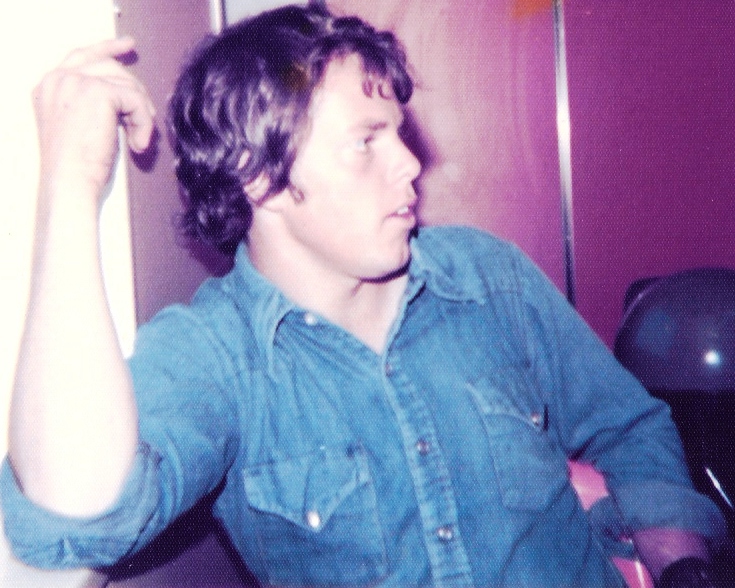
flying-001.jpg Was I really that young ?

1975 !

flying.jpg

Posted in Flying Stories | Leave a comment

More from Mexico…….

The Conifor (Mexican forest service) is always interesting to work with. I enjoyed running my own show in Ensenada, but it had its price. These folks will kill you if you let them. We had two fires in three days. One was about 3500 acres and one was about 150 acres. We had the only helicopter and a total ground force of 16 firefighters and an unknown number of soldiers. We usually work with the soldiers but this particular fire had soldiers deployed separately from the Conifor personnel. That situation was new to me but like I have said before nothing is as it seems down in Mexico.

copy-of-mexico-005.jpg
Our fire suppression efforts began with me flying two guys from protection civil and an older gentlemen who had water in several containers. One water box was supposed to be left for the older mans two sons, who’d decided to fight the fire on their own. Volunteers? We were going to perhaps air drop the water to his sons if we could not land. That did not sound good. I had two guys I didn’t know, and a Father who I am sure had never even sat in a helicopter before. After some explaining about what we would and would not do, I made it clear that the cardboard box with the water would not be floating out the door (toward the tailrotor). Since nobody had helicopter experience, one of my people would do any water drops that may be required.
Off we go. Dad apparently knew where his boys were, based on a cell phone call he got before
the batteries went dead on their phone. We spotted soldiers while looking for the boys. No shovels and Pulaskis for the soldiers, only small arms and they were not waving. Not liking the developments, I started to ask a few questions. It’d been about 20 minutes flying around the fire and the boys were not in sight. Well, Dad decided to fess up. It seems his boys were out protecting their marijuana farm and since they didn’t know who we were, the old man thought it might be good to have his smiling face delivering the water so the boys did not actually shoot us. Good idea, but I have a better one.

Back on the ground we loaded firefighters and got back to work, now quite aware that I have armed combatants on the fire. We got lucky and a soaking rain lands on the fire and puts most of it out. All 3500 acres. Thanks for the break.
Its time for an evening perimeter flight, see if we have anything kicking up on the edges of the fire. We spot a small fire in a green ravine in a green island in the fire. I am suspicious. I fly over and see some irrigation lines. Oh,oh. Vamanos rapido.

“Yes, I saw what I saw” I tell my boss from Conifor and “Hell no! I will not return.” There was at least one person I spotted down in the trees. We recorded the G.P.S. coordinates and reported the suspected marijuana site to the soldiers when we land back at the main fire “base”. The next day we brought a clean up crew for some hot spots on the perimeter. As fate would have it the only major spot fire was near the marijuana garden. No bueno. I landed the crew close on a road and shut down. After a few minutes the crew was in place and I was above on the road looking down into the ravine. There was movement in the bushes down the ravine below the crew. I climbed a rock out-cropping for a better view.

“Its only soldiers” I announce to the crew. Hearing this, the crew scrambled quickly uphill towards the helicopter. Well, I wasn’t nervous, ’till I saw that. Soon I was beside the helicopter, telling the crew that I would not start the ship. I saw the soldiers when I was jogging to the ship and they would be here in seconds. They were. No guns were pointed, but I soon saw why. There were 4 soldiers on rocks nearby who had us covered. Six other soldiers checked us out. No problem. Just tell them who we are and we should be good right? “Well maybe,” the interpreter says as he looks at his shoes. “Maybe?” I repeat. “Yes, well soldiers sometimes plant marijuana to supplement meager incomes and they do have the vehicles for the back country and they definitely have the weapons.” My interpreter/manager interjects, looking more than nervous.
We show I.D., and were thanked. Good, so far. I could follow most of the conversation. Everyone spoke slowly and carefully.
“Did we see anything yesterday around the Marijuana ‘garden’,” they asked? I asked the interpreter “has anyone said anything that I should know about?” “No,Nothing!” He just about shouts. Okey dokey, then I don’t imagine I will be talking about the person in the trees near the marijuana garden I saw yesterday. I won’t be mentioning that the guy had a yellow dirty t-shirt and army fatigues. You can buy army fatigues anywhere I am sure. Probably wasn’t a soldier and I don’t really want to know.

Nothing is as it seems down here in Mexico.


9000-near-mtdiablo-baja-mexico-copy.jpg


Posted in helicopter firefighting | Leave a comment

Here and Now


happy-guy.jpgPaula once asked me if I ever just sit back and enjoy a moment without thinking about the downside. The answer is that I do,but not for long.I suppose you may construe that as a character defect but it is not exclusive to me. In fact after flying heliopters for 33 years I find that most of my pilot friends think the same.

I recall a story,it may be a biblical one ,of a leader who was selecting soldiers . He marched the soldiers,weapons drawn through a hostile area on a hot sunny day. When the soldiers came upon a water hole,they were allowed to drink. The soldiers that drank from the water with their weapons in hand were selected,those that cast their weapons aside to drink were not.

When I think back on this summer I remember the good times as is ,thankfully, generally our nature. When I sleep my subconscious takes over. For every scene of floating in a warm sea just off a beautiful tree shaded beach I have other recollections or reenactments.

It’s just the way I live. I can appreciate a beautiful mountain setting with a village perched on the rocky hillside. When a fire is whipping up the hillside into the village the scene disappears and another takes its place.You are low over the village,houses are starting to burn on the perimeter and you spot the horse.He is tethered in a pasture on the edge of the town and he is going doing all he can to break loose. To no avail. Drop and drop more water around the pasture while a home starts to burn. You are out of water and its time to go and get more water. When I get back to the village with another load of water Ihave a choice to make.

Days later,its a day off and we are hiking through a mountain side village. The houses are so close ,neighbors could reach out the window and shake hands with each other. Its a beautiful place to visit. I look around at the 6 foot wide streets. not a hydrant or water source in site.Good luck ,if a fire ever gets going in here. Its just the way I think

Beautiful sights,wonderful perfect days enjoying the sights and culture of Greece interspersed with tragedy and more frightening events than anyone needs in a lifetime.

I really make every effort to enjoy the moment. Like Jimmy Buffet wrote, “its 24 hours and maybe 60 good years,its really not that long a stay”

I was talking to a friend this Spring via today’s medium of choice, the email. He was on the fires in Florida and things were settling down and he was going to do some local touring. Why not, enjoy the local area and have some fun.We had been mostly forwarding each other stories through the summer.Two days ago he wrote to tell me he was in full hospice care at home and the prognosis was not good. I’ll miss him. I hope he had a good run. I think he did. I do enjoy those moments when the world is just perfect. I wish they were longer.

Posted in helicopter firefighting, World Travel | Leave a comment

Billy is Dying


I was up 12 feet in the air in the dark when I heard the news. Climbing down the gear leg of the SkyCrane with my flash light I walked over to our interpreter/ pilot Kostas and asked him for a little more information.

Yes, he said, it is a critical rescue mission that will begin tomorrow at first light . I always enjoy Kostas’s sense of humor and get his jokes right away so I waited to hear just how a critical rescue could wait 24 hours. The goats of Anti Milos Island are out of water and we will be flying fresh water to their water hole he said.

So it takes a day to plan this mission ? No, but the press need to be notified so that they can send a film crew. The Mayor of Siros has organized this and SKED ( our controlling agency) needs to approve the plan

So at least we have a plan, I said. Maybe,said Kostas.
During that day our “plan” was fine tuned.We would launch at first light.I never hear the phrase “first light” without thinking about my friend Wade Green ,a helicopter pilot for 40 years and countless early morning missions.When I retire, I never want t hear anybody tell me to be going anywhere at first light. How many times Wade continued, have you preflighted in the dark launched at first light and got to where you needed to be only to sit on your butt for the next couple of hours . Too many times I thought and this would be ,plus one.

Since the mission would be based from the Island of Mikonos a mechanic would be on the flight crew, making it four for breakfast at the airport cafe on Mikonos.Dreaming. The mechanic, in this case our crew chief Mark would finish his night maintenance get a short nap in the early hours and jump aboard.The only time mechanics get any real sleep is when one of us hero pilots is telling another fascinating tale of brilliant airmanship.the-crew-up-front.jpg

The flights off on time with the back light of another sunrise casting an angelic glow over my fellow goat rescuers. We pick up water at Marathonas Lake and head offshore south of Athens , Frank Sinatra is singing “somewhere beyond the sea” on the ipod and life is good.

Its going to be a costly mission. Marathon Lake to the goat water hole shows about a 100 miles on the G.P.S. another 65 miles further to Mikonos Island for fuel and hopefully a suitable water source. About a 6 to 8 hour mission to get 5 to 7 thousand gallons of water to some goats.Well, who am I to place a price on saving Billy and the rest.

The water drops go well and breakfast never happens. Big surprise! Our fourth load is to be our last according to SKED. We speculate that perhaps since the media has failed to show and document the current governments sincere concern for the suffering goats ,that will be enough water. I compute the cost on the ferry trip back to our airport. Forty two thousand plus fuel for 5000 gallons of water, runs about 11 bucks a gallon.

Sip that water Billy and say a goats prayer for rain .anti-milos.jpg


Posted in Flying Stories | 1 Comment

The Last 10 Days

Sunday Morning on CBS, has long been one of my favorite shows on television. It has held onto its faithful followers and its early morning time slot means that it competes with cartoons, evangelists (same thing) and infomercials. The show has nothing to sell and whats even better, it tells a personal story that helps us relate to the event and the people involved. Like many of you, I grow numb from television news and its in your face look at the days tragic events.

The past two weeks have been like a constant news loop of the fires in Greece. Wake up to the alarm at dark thirty and I feel like Bill Murray in the movie, Ground Hog Day. The same scenes of fires overrunning villages, our desperate attempts to get enough water drops before the village to slow the assault. The inevitable fire in the houses on the edge of the village, which ones to try and save which ones to leave. And worse, which buildings to drop on or into to stop the fire from spreading to the others. Screaming fire fighters on the radio arguing over which part of town has the priority.

0562804400.jpg

“Drop here! Drop here” they shout in Greek. I’ll drop where I can do the most good, but if one more person runs out under the drop with a garden hose and an olive branch I’ll have to work another area. Like physicians, “First do no harm” is our motto as well. Knocking someone to their knees with 1200 gallons of water as they run towards the the flames in their yard makes my stomach turn. Its smoky, we are the only air asset that can get into and under the smoke on these mountain villages. Sometimes we are the only asset period when we arrive. A village of two or three hundred houses has only a handful of die hards with tractors and water pumps. The power lines burned down hours ago and no power, no water. No radio screaming, just a silence as we drop into the village from the nearby reservoir.

“Where do you want to start?” asks the other pilot.

“Lets save the houses that are not active and then work on any burning buildings that look like they will get others involved.” Ok. Triage for a village.

We have been working near Kalamata (the olive city) for some days. The fire has run through several villages in the mountains above Kalamata. I don’t know the village names, the village we are on now we call “Village One” because its the first one of the day. “Second Village” is under control, we will likely lose the battle for Village One. Its a six mile run to the sea for water and we pass the two Russian Mil 26’s working just above the City of Kalamata on our way down to the sea. They are losing too and the fire is getting down the mountainside into Kalamata. We make two more series of drops into Village One and the last drop is down the edge of the main perimeter street surrounding town. I don’t know what a SkyCrane 40′ off the ground at 50 mph looks like when it drops just in front of 200 people, but this one knocks all the cliff side shrubbery off the hill and takes with it about 15′ of mud and sends it down the hill towards the flame front. Instant fire break folks – the bad news is, that is all we have for your town. The radio is going wild. The fire has got down into Kalamata and firefighters are trapped, surrounded, on a hill top near a house and they have no water and no vehicles can get to them.

Well at least the sea is closer for water to the fire in Kalamata. There are about 2000 structures between the fire and the sea, but first we need to take this water to the house on the hill. Through the smoke as directed to the hill on fire and drop just in front of three firemen pointing at the flames. Good. You’ll live.

The fire is ripping down a hillside orchard and into a green area of the city but we get it stopped in about 40 minutes. Its the last drop before fuel and we are feeling better about Kalamata as we wonder aloud to ourselves about what we will see when we get back to Village One. Its my usual low pass over the buildings to the beach and in the clearing air I can see hundreds of people on the roofs of houses and apartment buildings. As we approach we see them applauding with hands held above their heads.

“Look at that,” I say to the other pilots as they look down. “Your welcome.” says the second pilot, snorkels coming down, speed 50 knots and 120 feet,40 knots and 80 feet, a boat on your right and we are past that buoy,looking good at 30 knots and 16 feet with water coming in and 200 gallons,300,500,……

seasnorkeling.jpg

Posted in Flying Stories, helicopter firefighting | 1 Comment

Eleftherios Skilos (Free Dog)

The Greeks first coined the phrase, “Live free or die.” That may be a good philosophy for most of the dogs living here in Athens. Athenians do love their pets. Pet stores outnumber sports stores about 10:1. The problems with dogs as pets, is that most people in Athens live in apartments or multi-family buildings. There isn’t much in the way of green space and dog crapping areas. I notice most Athenians pick up after their dogs. Exceptions are the elderly who despite their intimate knowledge of their neighborhood never walk on the sidewalks at night. When given the choice of picking up dog crap off the street or getting run over by a speeding car most elderly have not attained old age by being foolish.

Dogs of every size and mixed breeds are found in our neighborhood of Lykovrisi. Like most people there are responsible considerate owners and a few others who shouldn’t have an ant farm.

When we lived and worked in Athens prior to the Olympics there were dogs everywhere. Dogs were sleeping in front of any shop that had food, lazing under trees and darting into traffic or crossing responsibly at the lights. Just prior to the Olympics, dogs and cats were rounded up in huge numbers. The dog population was decimated while the cats have repopulated to the same levels. Only the quickest and cleverest canines are still running the streets. Its a state secret where all the dogs went but sausage sales dropped off in Athens dramatically in 2004 I am told.

In Lykovrisi the area is almost all multi family upscale small apartment buildings with little or no yards. Everyone knows each other and their pets. A few doors down from us a lady lives in a ground floor unit with some citrus, olive and fig trees, a few flowers and a little patch of grass. She also has a cocker spaniel that smells like a popular local perfume and is groomed like a super model. Across the street a beagle spends about 12 hours a day on a 5′ wide balcony. Sun hits the balcony at least 4 hours of the day and the dog barks at passers by while sipping water from its bowl on days when the temperatures exceed 100 Fahrenheit. A beagle should be sniffing out new trails instead of sitting smelling its own urine on hot concrete .

beagle-on-balcony.jpg

I have several dogs in my life now. As you may know, our dog Zoe is enjoying a vacation of her own living at Pat’s house in Bishop. Days of swimming and sleeping in the shade of the spacious backyard agree with Zoe. When dogs age, they find traveling more stressful and start exhibiting unusual behavior. Zoe has given up her manic dirt eating and is acting the same as she did on the mini farm in Washington, relaxed and happy. Travel is stressful for elderly dogs and humans but we hope Pat and Zoe are still looking forward to a few more trips with us.

I have some other dogs too. At our air base we have about 25 strays. Three packs of about 7 or more dogs. A creek forms the territorial boundary for the packs. The east creek pack lives on the runway control tower side of the base with us and is made up of smaller and younger dogs. The West creek pack are mostly larger mature dogs and the North pack is made up of outcasts and newbies. When I cross the bridge over the creek walking west in the early morning I frequently encounter the west pack. It’s necessary to walk by the west pack like the alpha dog. One of the pilots crossed over to the other side of the road approaching the pack and got a nip on his Achilles for his show of weakness. The east pack dogs range in size from 10 to 40 lbs and its leader is a female long haired Dachshund. The ladies who work the control tower and meteorologic office often feed the dogs. A couple of sad specimens with damaged legs are the ones I feed. Dog packs share food, but its a hierarchical system and the lesser dogs often find that when the food is short, their share comes to zero. The Greek pilots, interpreters, mechanics and even the fuel truck drivers all take exception to me feeding the dogs. I find their criticism curious and one day I asked a few of them why they object to my charity. The dogs limp over, chow down and leave without a wag of tail or show of thanks. They never get underfoot, with the exception of the dachshund who is tolerated.

“So why the dislike for my feeding the dogs.” I ask the assembled Greeks one day.

“To a man,” they tell me “these dogs should be gone. They have no life and would be better dead.”

“Well!” I respond, “So, the country that invented democracy believes that you are better off kept, than living free? No wonder Greece is embracing socialism. You all want the government taking care of you from the cradle to the grave.”

The Greeks have witnessed my debating style previously and don’t jump up and beat me to a pulp.

I continued the dog debate with my Greek coworkers. “Its August,” I said “vacation month in Athens and we will see more abandoned dogs as vacationing families leave their dogs to fend for themselves. The European Union pumps a million dollars a year or more into Greece to aid in the domestic animal problem.”

“The base commander should get rid of the dogs” the Greeks tell me. “The dogs have no life here!” I argue that they have a better life than many of the dogs I see apartment bound in Athens. They have a free run of the base, once a week they have a good old fight on one of the bridges crossing the creek, they eat what they can, sleep where they want, have an unrestricted sex life and answer to no man.

I get the one shoulder shrug from my audience. They don’t agree with me. Debating with Greeks is like facing the pack, never show weakness. Perhaps the charity I bestow on the dogs is viewed as a weakness? Not leadership conduct becoming the Captain perhaps? Well a good leader makes his own choices and like my favorite bumper sticker states, the more people I meet,the more I like my dog.

Posted in World Travel | Leave a comment

Pockets Full of Money

One of the best reasons to travel, read and investigate other cultures is to get a different look at life. If you happen to live in North America either Canada or the U.S.A. your views on life while politically different have similar values perhaps.

We have had the good fortune to work and live in several countries. The U.S.A. is the new big dog on the globe and it is natural that most Americans have reason to be proud of the quality of life they enjoy. History has shown however that all successful societies have tended to collapse under the weight of their own excesses. The old world countries have all had their time in the sun. The U.S.A. is almost universally regarded as a spoiled child with more money than brains.

I used to think that the old world disdain for the new world power was simple jealousy. We have the money and the good life and countries like Greece, Italy, France, Great Britain are just has beens. I am not so sure anymore. Like George Carlin once asked, “what the Hell do we need all this ‘stuff’ for anyways?”

My Greek pilot interpreter, Kostas, was asking about our work schedule. He was curious to know if most people worked 3 weeks on and 3 weeks off in the United States and Canada as we did here in Greece. “No, not hardly” I said, explaining that most married couples are both working. The average length of work week has increased and while personal wealth has increased we have become a nation of consumers. What did I mean by a Nation of Consumers he asked?

We have learned that buying “stuff” and accumulating toys and belongings will make us at least temporarily happy while appearing successful to our neighbors.

The problem is the average North American has a credit card debt of something in excess of $6,000. per person. Most families spend less than 40 minutes per day together. That same family gets one short two week vacation (sometimes three weeks) a year, the cost of which is amortized over the next years credit card payments along with the excess Christmas spending and the boat and RV that’s hardly used. By the time we retire or are able to, we hit the road traveling the world and realize our life has been consumed with consumerism. We find that most people in other countries are unusually content even though they lack the same material wealth we have become obsessed with obtaining. The shock of this revelation makes us bitter and we return to our home and buy an even bigger RV and travel North America showing everybody how well we have done financially.

Kostas knew my story was an exaggeration. He said “we have a saying that asks the question, ‘what are you going to do with your money? Stuff it in the pants of your funeral suit?'” I agreed, we have a similar saying, “you can’t take it with you”.

“Yes” he said. “The difference is that we have had about 4,000 years more than you to understand what makes it a life worth living.”

Yeah, we are a young spoiled society. We will learn. I hope.

Posted in World Travel | Leave a comment

Holding the Line

Summertime and the living isn’t always easy, here in Greece. My assignment is firefighting with a SkyCrane based in Athens. The flying we do with this impressive aircraft is called I.A. or initial attack. It is a simple program, get to the fire as quickly as possible and put it out.

You may think that this is the case for firefighting aircraft and personnel everywhere but I assure you it is not. It has been a very busy season protecting the City, the Attica region and the Cyclades Islands. By some accounts it has been a failure.

Our critics have been screaming on television for a couple of weeks now about the Hellenic Fire Brigade’ s inability to stop a wildfire that burned much of Parnitha, a National Park and Mountain overlooking Athens to the North West. I can take some satisfaction in knowing that I did some of my best flying on that fire and other fires in the area. The talking heads on the T.V. and so called experts can analyze, criticize and belittle the efforts of the firefighters on the ground and in the air. It is their democratic right and in a pre-election year I would expect no less.

It is probably a good thing that I can not understand most of what is being said on television. In more than 20 years of aerial firefighting in 6 countries I have seen a lot of firefighting operations but none more aggressive than the Greeks. The following is a recent example of a fire in Athens. To say that Athens is a concrete jungle with just a few green islands in the city is no exaggeration (picture from Webshots)

An afternoon dispatch call comes in for a fire in the south east side of Athens. We could see the smoke as we quickly got our flight suits on and jumped in the Crane. Our usual crew of two pilots and a pilot/interpreter in the back. The pilot/interpreter has the unenviable task of sorting out calls from three radios in two languages from numerous ground personnel, 6 other aircraft and cell phone calls from SKED our controlling agency.

The fire was quickly running through a tree covered hillside within a residential neighborhood of primarily apartment buildings. In the 15 minutes since we had launched, the ground forces had begun their defense with numerous pumper trucks and more personnel on the ground than we could possibly keep track of down in the tress.

We would have to make our drops with enough force to be effective on the crowning fire in the trees but not get a direct hit on any personnel. In Greece that is an even bigger challenge than elsewhere in the world. Along with keeping track of 4 Canadair water bombers, A Mil 26 with a 200′ line and bucket and another SkyCrane sent to help just minutes behind us we also had the citizens of this Athens community pitching in on the fire line. It is a common sight to see local residents with wet towels and T shirts pummeling the flames on the flanks and even the head of the fire in some cases. We hit the fire and the residual spray wets down the people and their fire towels and they run back into the fire line. I have never seen that any where else in the world. Its both impressive and frightening. We carry about 6 tonnes of water for each drop, the Canadair water bombers are about the same, the Mil 26 is a bit more. At any rate its enough water to flatten a car let alone a citizen in a pair of shorts and a soot blackened T-shirt. On this day the locals were working on the flanks of the fire only. The Fire Brigade was fighting the head of the fire and we were doing our best to get under the column of smoke, clear the numerous wires and drop on the fast advancing front. It was not going good and the Fire Brigade had been forced to back away from one road to another as the fire jumped each successive road. The fire was on the lee side of a hill crowning in the tree tops with 20′ to 30 ‘ flame heights. The Hellenic Fire Brigade had leap frogged their trucks and personnel to the last fire break before the apartment buildings. The line had been drawn. It was a little 14’ wide dirt road at the bottom of the hill. Behind the fire crew and their trucks stood about 100 people between the tree line and their apartments. Many people stood with dripping towels over their arms and I could tell by their hand gestures that they were shouting down to the Fire Brigade below. If you think for a second they were shouting encouragement to the fire crews, you don’t understand Athenians. They were probably shouting, stop that fire *#*^+# or we will be beating out more than just the fire!

Time for one more drop along the front then back to the sea for another load of water. Our return time would be about 9 minutes. The Fire Brigade stood along the road wetting down the close vegetation and waiting for the flames. The other aircraft were also heading to the sea for water and I said to the other pilot that I thought we would be fighting the new fire line at the apartments. The fire brigade would stand their ground but I was fairly certain the fire would spot over them or burn over them. I thought about what it would be like to see that flame front coming at you as you stood with a water hose and waited.

It occurred to me as we returned with our load of water that some of these people on the fire line may have had ancestors that had fought at places like Marathonas. Back in about 490 B.C. a hugely overwhelming force of Persians had landed on the plains of Marathon prepared to kick some Athenian ass. They did. The Persians killed almost 200 Athenians and lost about 6400 Persians doing it. That took the fight right out the world conquering Persians and they sailed for home.

We got over the fire a couple of minutes later. A black line stopped cleanly at the little dirt road and no fire spotted over the line. People at the apartments were waving towels and blankets, a few citizens on the fire flanks were waving their shirts. The fire Brigade was picking up tools and hoses and moving away. The job wasn’t over yet and there would be areas to mop up and wet down.

We spent another two hours flying the fire perimeter putting out flare ups and keeping things cool. Mission accomplished and back to our base. At the base we sat in front of the t.v. with a cold drink watching the news channel and listening to the experts scream at each other about the fires.

“What are they mostly saying?” I asked the interpreter. He just waved his hand in the universal back hand of dismissal. More bull shit.

The talking heads can have their say. I have been flying on fires for a lot of years and I’ll fight fires with these folks any day.

Posted in Flying Stories, helicopter firefighting | Tagged , , , , , | 1 Comment

Remembering Katrina

In the last days of August 2005 a local firebug was keeping me busy flying initial attack helicopter firefighting in the evenings after my regular work day had ended. Paula and I were sitting down to a late night supper, checking the news to see “you know who” fly on the latest fire, when the initial Katrina weather alerts began to filter in. I was up at two a.m. watching the news on the night Katrina slammed into the Gulf Coast. When I returned to bed I said to Paula, “This is going to be bad.”

Although Louisiana has more helicopters than any other state it looked like they were going to need a few hundred more, from somewhere. I know Washington State is a long way away from Louisiana and I knew there was no National Disaster Plan that actually coordinated efforts but we had to get involved. I called the Federal Government’s Interagency Centre in Boise Idaho, the response was that no contractual agreement existed that would allow any of the more than 300 aircraft they held under contract from private operators to respond at this time. Useless. Our call came at about 2 p.m. the next day. The F.B.I. needed a helicopter in New Orleans and they needed it there in 24 hours. How and why the F.B.I. was calling a helicopter company almost 2000 miles away is another story in itself, but we quickly got the helicopter ready at the hangar. With my gear packed, a “see you sometime” kiss to Paula, I was on my way by 4 p.m. with about 2 hours of light and 1850 miles to do in 21 hours.

At 10 p.m. flight service in Salt Lake advised me the lightning I was seeing was a fast moving front, which forced me to divert and land for a few hours in Burley, Idaho. By 3 a.m. I was back in the air, but behind schedule. The next day was fly, fly, fuel, eat snacks Paula packed, fly, and fly. I began to get a better picture of things as I got closer. The F.B.I told me there would be a trailer and shower when I got there. Sure, I know B.S. when I hear it, the F.B.I is no different. I found myself under direction to fly to Baton Rouge instead of New Orleans, and had to explain that “No, I will not be ready to fly when I get there at what looks will be 9 p.m.” I had been up for 17 hours, napped for 3 and had another 18 hour day just to get there. We agreed to meet the next morning at 8 a.m. I had been calling ahead searching small towns for rooms as I flew and finally found one. The airport manager was barbequeing at home when he heard me fly in at about 9 p.m. The manager delivered me to the Motel, handing me about 4 lbs. of barbequed pork, beef ribs and beans. God bless my fellow aviators.

I could talk about my flying exploits in the New Orleans area on Katrina disaster relief. There are, as you can imagine some good stories. But I want to tell you about some people I met. A lot has been said about the people who survived Katrina. People behaving badly make news. Families sticking together and helping each other through devastating personal and financial loss is not sensational news. Just humans at their best.

The good news was that I got to the Emergency Response Center in Baton Rouge before President Bush arrived. His helicopter was going to be landing next to mine very soon. Bad news was that the FBI wanted me to fly them out right away and the airspace was now closed. “Its called a Presidential TFR” I told the agents, “and busting it would be akin to a White House over flight and may result in death, disgrace, at the very least a revocation of my license and I suspect about 30 days in the electric chair.” After several calls on the part of the FBI and a very detailed call to the FAA emergency help desk by me, we were granted special permission to leave in the next 5 minutes. I checked my transponder code about 3 times as we flew towards New Orleans. Nervous? You bet. We made it through the first day in New Orleans.

katrinablog2.jpg

Back that evening in Baton Rouge at the Emergency response center I watched dozens of helicopters coming and going The media was camped out everywhere, police, military and my buddies from the FBI and secret service. No trailer, no shower, no food but I was still way better off than most of the folks I had seen that day, so no complaints either. One of the FBI folks, a New Orleans resident (now homeless) told me that he had a cousin living here in Baton Rouge and that his cousin may be able to put me up. He would call him for me. The call went like this,

“No Dusty he is not an agent, not a criminal and no he is not currently charged with any crimes. All his previous charges were dropped for lack of any living witnesses”. This seemed funny to who ever Dusty was and I was invited to come over to their home that night. Thank You.

David and Dusty Snyder were waiting for us when we arrived at their suburban Baton Rouge home that evening. After introductions on the front porch I moved my gear into their house and apparently one of their daughters bedrooms. The pink my little pony decorative theme was a hint to the little girls age. I was not the only guest. There was Davids sister from New Orleans and his Uncle Frank and Aunt Mabel from St Bernards Parish.

“Have you eaten?” was Mabels first question. I had, in fact. Least I could do was buy my buddy from the FBI dinner. When we sat down at the table it was quiet but friendly. It seemed that about ten family members were unaccounted for after the storm. In this part of the country literally everyone knows each other or are related and their whereabouts are usually known.

“The phones and cell phones don’t work in New Orleans now” I said. “Have you flown over most of the area and in particular St. Bernards Parish?” they asked.

“Yes,I have.”

“Do you know where Shell Beach is?”

“Yes, I do.”

“And how does it look?” Everyone was staring at me. How do you tell somebody that there is no Shell Beach anymore. Not a stick of wood. Not a wrecked car. Not a boat. Nothing you could recognize as anything. Water and floating debris. A greasy oil sheen where you lived for how long did you say? 87 years? I toldl them what I saw and then took a big drink of my water. Mabel looked at the table, “Anyone want some more tea?” she asked, walking to the fridge. Nobody spoke for a bit and then Uncle Frank said,

“Well,I knew it would be bad. We’ll get by, always have.

“Is there land showing in places?” It was the sisters turn to ask.

“Yes, it was those places we landed today.”

“What about animals, were there dogs? I had to leave my dog behind,” she almost started crying.

“There were more dogs than I had ever seen wandering around.” I said. Thinking back on the day, I had been fortunate to run into friends and fellow pilots at the International Airport in New Orleans, they stocked me up on food and snacks from their supplies. I handed it all out to the dogs that day. Every where we landed, hungry dogs. No cats. I walked around the back of a house situated close to a levy on a piece of higher ground. A little island of green grass in a wasteland of submerged houses and businesses in a mostly commercial district. Whoa! A horse in my face. I don’t know who was more startled, but I made the louder noise. How far and through what had that horse swam to find the only food and dry ground around for miles. Survival. Nice horse, I hope he lived.

After supper everyone went off to bed early. Depressions escape. Sleep. David sat and talked to Uncle Frank and myself. I mostly listened. Uncle Frank was known to most as “Blackie” Campo and he and his family had come to Louisiana via the Canary Islands. There had been Campos in this part of the world since the1800’s. The Campos were outdoorsmen, hunters, fishermen, guides. Blackie owned,(used to) a marina, three houses, dry dock, fishing supplies, bait, fuel and free fishing advice, guiding if you really wanted to catch fish. David had worked summers for Uncle Frank. A great guy to work for, tireless, stronger than any two men. I didn’t doubt it. Uncle Frank had those huge hands you just stared at after he had shook your hand. At 87 he was still an impressive figure, wide shoulders, big arms, a voice like the first two notes on the piano. As it turned out, a voice that could tell some great stories too. Blackie had been one of the first people inducted into the Louisiana Sportsmens Hall of Fame, and David said “that Uncle Frank was still one of the best fishing guides in Louisiana.”

Frankie is what he liked to be called. He said to me, “Yeah, I’ve done some fishing in my life”. Had been the fishing guide to five Presidents. Five letters from five Presidents, thanking him for his work. All those letters and all those photos, memorabilia, memories, locked safely in the trunk of the car, sitting on high ground where it had never flooded through countless previous hurricanes. Gone.

David had gone to bed. Frankie and I were talking. It was late. I would stay up as long as Frankie wanted to talk. Frankie needed the audience and I could listen to his stories all night. A life, full. A day spent fishing with Frankie would have been a great day whether you caught fish or not. Presidents could fish with whomever they wished. I knew why they had gone fishing with Uncle Frank.

Every night at the Snyder’s was an event but I needed to go. I would miss Frankie quizzing me on my days and sometimes night flights and I especially would miss his stories. The last night, Frankie was listing the gear, antiques and memorabilia that they had lost when Mabel came out to the living room.

She looked upset and I thought she was going to tell Frankie to get to bed. She was the boss and Frankie adored her.

“I’ve been listening to your list,” she said “when it hit me that all our financial books are gone too. No record of all those fisherman you carried on the books for months Frankie.” All the bait, fuel, repair bills. These were commercial fisherman. Once large operations with multiple boats, some boats in tact some not. A lot of money owed, no records.

“That’s all right Honey,” Frankie said. “They know us, we know them. They’ll pay their bills when they can.” Mabel didn’t look so convinced. “Good night gentlemen.”

I left the next day.

I never saw the Snyders or Campos again. I call every now and then. “Please cash the check my company sent you David” I had said. David would not take money for my food and lodging when I was leaving. Stubborn. How was Uncle Frank doing? Was there anything to salvage? A little, he said. But guess what Uncle Frankie is doing?

“Fishing, relaxing?” I was joking of course.

No, he bought a fuel truck and he is fueling the commercial fishing boats around the area. I asked him, “well, Uncle Frank, do these guys have any money to pay you for the fuel?” “No,” he said and they won’t have any money till they bring in some fish. Someones got to help”.

The world could use a few more Blackie Campos. I’ll never forget him.
Posted in Flying Stories, Helicopters on Katrina | Tagged , , , | 1 Comment