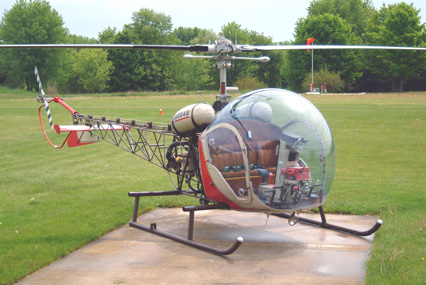
Preflight

Pilots perform preflights. At least they should. Whether you like to refer to the procedure as an exterior inspection or something else is fine with me. I have heard the semantic argument that pilots can’t do a preflight inspection because only the AME can do an actual “inspection”. This blog may be boring enough without that crap so I’ll skip that argument. A Preflight is a legal requirement and can help you have a much longer career than foolish pilots who do just a quick walk around.Most professional pilots know this and act responsibly.Most of the time.

A preflight should be methodical but not routine. A routine can create complacency and while it is important to check all the critical items it is also important to look at the aircraft from a changing perspective.Most commercial helicopter pilots that I work with do a once over and then pick a different zone of the aircraft to “key on” each day. I also like to consider any factors that have changed in the flying or circumstances that are different. Was the aircraft washed, was it a cold below freezing night ,what was worked on recently ? That sort of thing.
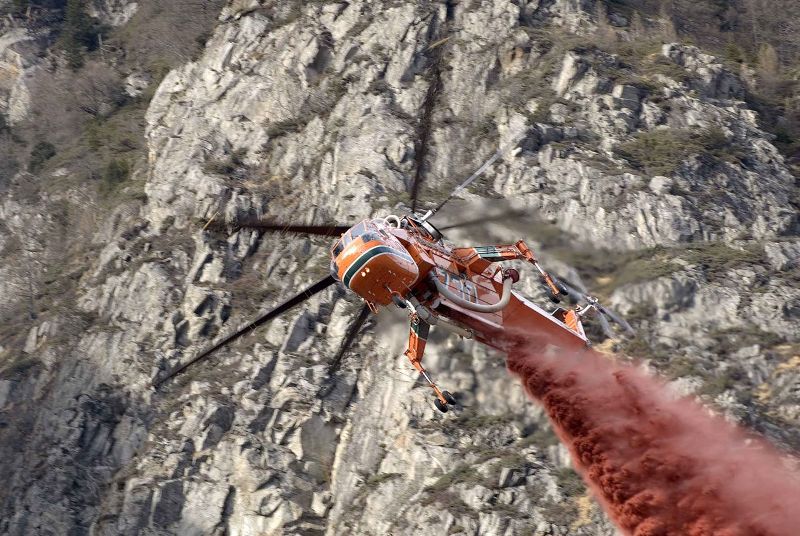
On our S-64E we have no less than 5 people looking at the aircraft each day and night. A post flight is perhaps more important or at the very least, equally important in our operation.I believe a post flight is more important than the preflight in single pilot remote operations.It is surprising how few pilots do a post flight when they are the only crew member on site.

In our operation we have five sets of eyes looking from differing perspectives at the same aircraft. A post flight tells us the condition that aircraft was brought back in and if non scheduled maintenance may be needed.The single pilot operation remotely operated frequently allows for the pilot to perform the preflight sign offs including any A.D.’s and with FAA approval some preventitive maintenance ,including items like chip checks if such were to occur without maintenance available.

So why I wonder, do so many pilots in the position of being the only crew member ignore the post flight ? I remember asking this of a pilot in my employ some years back and he said it was simple. After flying for several hours he had to make the choice between crawling over the ship or pouring a cold beer.

I laughed right along with him as I dug into my pile of resumes. I was sending a mechanic at 7 in the morning now when the post flight would have had the mechanic going out at 7 the night before. The aircraft would be in service now. The customer would have been much happier than he was currently.The other factor to consider is that doing a post flight gives the pilot two looks at the aircraft prior to flight.

The habit of doing a post flight and paying attention to changed situations has grown from some hard lessons learned over the years. Like the saying goes,”learn from the mistakes of others,you will never live long enough to make them all yourself”

The following happened quite a few years ago when I was fledgling helicopter pilot.The story is in the next blog called, Watch This.
Posted in Flying Stories, Helicopter Pilot | Tagged | Leave a comment

Watch This

The Hiller 12E had been delivered to the job. Literally. It was sitting on a trailer in the customers business yard all by its lonesome. The truck driver had, after driving all night in the rain, gone to the Motel for some sleep.

I walked around the helicopter and noted that it was sitting on the wrong trailer. Wrong in the sense that the Hiller which has wider skids was usually moved on a wider trailer.Imagine that? This helicopter sat on a flat deck trailer and the skids went out to the full width of the trailer and sat on the metal frame of the trailers edge. Not good.

I looked for the guide posts that slid at an angle into the edge of the trailer to help landing and take offs. They were missing and in fact there were no provisions for guide posts. Who  landed this on the trailer I said out loud to myself? A voice next to me said,”that would have been tricky”. I looked over at my customer, who added, “you need a hand” ?

“A truck, a set of ground handling wheels and a  tall building with a large chain hoist would be nice” I said,” but I know we have only one of those three items and in fact I don’t know where the truck is parked” .”We only have two Motels,so that is easy” he answered.

“Well, how about a small crane or boom truck, that would work” I added. “Nope not in this little town” was the answer.

They had put the helicopter on the trailer with a chain hoist in the hangar, ratchet strapped it down and brought it to me to offload .

I explained to my customer as we undid the ratchet straps just how precarious an operation this was. The helicopter had been driven here in the rain. The low blade would be,”loaded” with water, water that would only all sling out when the rotor r.p.m. got  going fast. As I increased the rotor r.p.m. on start up the unbalanced blade would get the helicopter bouncing and sitting on the edge as it was ,meant that I had a good chance of sliding off the trailer before I could get the engine up to flying r.p.m. There would be no proper warm up of the engine so it would be start, throttle up and pull collective. Not good.

My customer suggested leaving one or both ratchet straps on until the r.p.m. was up and for a second I thought; but no.I could try a warm up that way but what if the helicopter shifted? Even with the helicopter tied down it had obviosly shifted and sat askew on the trailer now.

A bouncing helicopter slides off the trailer,with the straps still almost holding it, or- just as the strap is loosened but not undone, – well , I didn’t need to finish that thought. I believed my best chance lay in a quick run up

I did a thorough,or so I thought preflight of the helicopter. It had been through a lot of rain, towed backwards so fuels were drained, ( had the fuel settled out) and the air cleaner cover removed.The air cleaner was supplied by an induction/intake hose that sat above the bubble facing forward. A pie plate looking cover held on with 4 inch standoffs let the ram air flow around the plate and into the hose. Because the helicopter had been towed backwards I checked that water had not got into the hose and down to the air filter. The air filter was clean and dry ,a drain on the bottom of the air filter had probably done its job. All good

With the customer and about a dozen onlookers cleared from the area I got in and with preflight checks done to that point ,started the helicopter. There would be no mag check and the run up would be quick and dirty. The Hiller had a mercury clutch that allowed a rapid engagement and run up. I hoped that would help as the out of balanced blades rocked the ship.I had the r.p.m. and the collective coming up quickly and as I pulled up, the Hiller lifted smoothly off the trailer. Sliding sideways I started to breathe a sigh of relief as the engine barked and almost quit. I yawed a little pulled collective and set the Hiller on the ground beside the trailer. What the… ? A run up and mag check produced no further engine roughness. Further checks were in order ! Bad fuel ? Maybe, but I had sumped fuel tank and carburetor . After a few minutes of looking around the engine I had my answer. The intake hose that went to the air cleaner & carburetor had a bow ,like a sink “P” trap  just before the air cleaner. When I lifted up and moved, the water in the trap had sloshed into the air cleaner.

Today, all these years later I can clearly see the chain of events that I allowed to build. I could see some of the risks at the time as well. I should have stopped and had the helicopter lifted off elsewhere or by other means. But as I said on a previous blog, I had not seen as many things go wrong as I have some 30 years later.

Posted in Flying Stories, Helicopter Pilot | Tagged , , | 1 Comment

Back and Forth

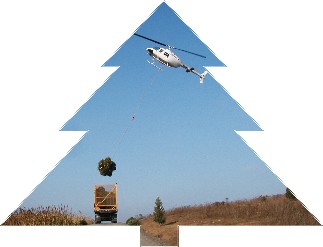
Christmas is about 90 days away but Christmas tree season for helicopter pilots begins in about 35 days. I have worked a few seasons slinging Christmas trees but last year was not one of them. Instead of fighting rain ,snow , low visibility and some crippling flying, I was down in Belize. I flew in Belize as well but the flying there was far less effort ,as is the way for just about everything that happens in Belize.

I don’t know if I will be flying trees this year or not. I don’t know very much about any of the flying I will be doing past the end of this month and that as they say is all I can say about that. Not knowing is not a new experience for me. In the past 34 years of flying I have seldom known more than a week in advance what was in store for me.

I have been thinking, remembering, reading my old logbooks and flipping through photos of  Christmas tree seasons past. The job is simple, repetitious and challenging. Like logging or shake flying or any other production sling work, Christmas tree flying takes precision, economy of action, quick judgment and endurance. Short days in November mean that the flight time seldom exceeds eight hours a day but those eight hours are busy. A typical hour long cycle in a small ship like the Jet Ranger, MD 500 or perhaps Hiller 12ET will produce about 110 or more turns in that hour. I have flown more than 140 turns into the trucks in an hour on close in flying but the average is usually on the plus side of 100. In an eight hour day thats about 900 loads back and forth to the trucks.

Flying begins at first light and goes till you can’t find the hooker(s) quickly enough in the fields or the lights on the truck are ruining your night vision or and this never happens,they have enough tress in the yard.

The customer wants his trees when he wants them and the pressure to deliver enough trees to keep 60 or more men gainfully employed sorting, wrapping,bailing, lifting,stacking and loading on trucks is significant.

To say that the flying is often done in poor weather is a given. Washington and Oregon late fall weather can be anything from Indian summer to zero-zero in ice fog and freezing rain. When your down for weather the customers reaction can range between frantic and psychotic. “I know you can’t fly now “,they will say as jump from their trucks landing six inches from your face. “But when do you think the weather will lift enough to get going again” ?

I don’t know of course and as I like to tell the customer, God has not seen fit to share that information with me today. I really hope that any message from the almighty would deal with more important topics but to the Christmas tree grower with his dwindling piles of trees, nothing could be more important.

It seems not to matter to the customer that you have a back up pilot ,a back up helicopter ,a mechanic on site, a maintenance van with parts, fuel truck(s) and a vast amount of experience from years of doing this work. The fact that in all the years of flying no significant delays to production have ever occurred is somehow forgotten in the all consuming panic that ensues when weather or other unforeseens has you grounded for more than an hour.

As the P.I.C.,you just grin and bear it. The work gets done, the customer starts to relax and a million trees get flown and shipped. Merry Christmas.

Posted in Contract helicopter pilot, Flying Stories, Helicopter Pilot | Tagged , , | 1 Comment

Greener Pastures

I was talking to a pilot friend online today. He was bemoaning the fact that those of us who fly utility type helicopters seldom get to fly new state of the art helicopters. The fact that he is on a seismic job flying bags with a Lama that was built in the 70’s and I am firefighting with a Sky Crane of similar vintage confirms his complaint. If you don’t fly for Public Service, Corporate,E.M.S., Offshore or Tours you probably don’t get to fly the new iron.

His question to me was; would a career shift to say, offshore be his ticket to flying newer and better helicopters. Newer yes and better maybe,although I happen to think that both the Lama and Sky Crane are in a class of their own. The real question is, would he be happy flying in a new helicopter if it meant doing a type of flying that perhaps does not suit his personality. There are so many different types of flying to be done with helicopters that you have to find what works best for you.

My friend asked his question because he knows that I have experience in all the types of flying previously mentioned and a dozen or more after that. I can’t really help him with his decision. I am a firefighting pilot in what I consider to be the finest firefighting helicopter in the world. Most of the time I like what I do a lot.

Last year I flew as a tour pilot,logging pilot,movie pilot,corporate pilot and firefighter. They all have something to offer and differ considerably. He may want to get out of the utility work and try offshore. I know he has the talent and it may be something he enjoys. At the very least he will, as the stock brokers used to say, “diversify his portfolio” and resume.

Flying is a great career ,that allows a person to travel and for the most part be his or her own boss. I hope he makes a choice that he is happy with. Work is important but at this point in my career I realize that a career is simply what I do part of the time. How I live now and what I will do when my chosen vocation ends is worth even more thought. Am I  living the life I want ?

My last line before we signed off was a quote that my friend may have seen before ,but, that I try and live by.

“Never confuse having a job with having a life”.

Posted in Helicopter Pilot | Tagged | Leave a comment

Flying Floats

We had an airshow at our little Albenga airport here in Italy over the weekend. To be accurate, the airshow was flown at towns to the east and west of us on the Liguria coast. Albenga is the only airport of any size to base all the aircraft ,so we only saw the warm up routines performed. The Italian Air Force demonstration team the Frecce Tricolori was here and several other aerobatic and vintage aircraft.

There were also some helicopters and no, we did not fly in the airshow. We were one of the static displays and my Italian copilot stood fielding questions and explaining our firefighting operations. My limited conversational Italian skills prevented me from participating and chatting with the hundreds of visitors but we were well represented.

The copilot commented on a nearby MD 500 helicopter on fixed floats and asked if I had flown such things. I had, but it has been a few years since I have flown on bags. About 18 years to be exact. When I started my career in 1974 we flew on floats more than skids. We had Hughes 500’s, Alouettes, Bell 47’s and Hiller 12E’s all on fixed floats. The country we flew in was more water and bogs than dry ground so it was a practical but painfully slow way to get around. The Bell 47 and Hiller 12 E are slow to begin with but put some floats on them and you were going no where fast. I remember always carrying at least four 5 gallon jugs of av gas strapped to the racks on top of the floats. God help you if you missed or couldn’t get to your next remote fuel cache. Most caches were a group of fuel drums at the edge of a lake, logging camp, Indian village or just a little strip where an Otter or Beaver could land and push some drums out in the snow the winter before.

Caches were ‘owned’ by one  or more helicopter companies and cache borrowing and raiding was an unfortunate fact. If you found yourself flying over another companies cache and it was looking pretty full you might just drop in and borrow some fuel. Proper etiquette was usually followed. Don’t touch the last few barrels and take the whole drum rather than a partial making sure to write your aircraft registration and date on the barrel top. Not everyone was so honest and arriving at an empty raided cache in the middle of nowhere was no fun. If you arrived with your spare fuel cans still full you may be ok. If not, you got to drain the water impregnated dregs from all the drums into one drum and the mosquitoes would just about fry landing on your steaming head.

Water landings,start up and shut down on floats are interesting and take some getting used to. When the tail rotor rpm is low and the main rotor torque is high enough ,the helicopter turns opposite to the main rotor direction. A couple of eye opening shut downs and start ups will improve your decision making and skills. Its usually not a factor.

One of the first jobs I did on floats was a bit bizarre. I wouldn’t do it now, but back then I was young and well, you know, not seasoned.(not smart) We had a contract to ear tag Moose for what ever reason. Today we dart the big Bullwinkles and wait for them to take a little nap.Back then we came up with a less costly but considerably more dangerous method. Moose will take to water and they can swim pretty darn fast. Drive a Moose to water and land beside him and taxi over.Watch not to tuck the nose of the floats under taxing too fast and position the Moose tagger,(another smart guy) near the Mooses head and sometimes big antlers.

Kneeling on the floats the tagger clips a tag into the none too happy Mooses ear. Watch the Moose doesn’t get a leg up on the float I had been warned. We already lost a helicopter that way my boss had said.

And still we continue to do this I thought ? I do this.

I survived the experience and only one incident,which was a miracle in itself. A big bull had got a hoof up on the float rack and I pulled power and moved sideways fast which didn’t end in the dynamic rollover it could have but did manage to land my tagger in the water.

I set down a few feet away and my tagger set the 20 yard dash speed record for a man dressed in a Mackinaw jacket,jeans and no more rubber boots.

I can’t and won’t write the dialogue that followed his soggy climb back into the cabin but the engine noise and my laughter drowned out most of the swearing any how.

Posted in Flying Stories, Helicopter Pilot | Tagged , | 1 Comment

When things go wrong

This was bad. I could see the sickening conclusion in my mind and I knew what had to be done to save the mans life. What I couldn’t do ,was communicate with the diver who was only a minute from getting himself definitely hurt and most likely killed.

Up till this afternoon it had been a challenging and pleasant assignment. A few months prior a Navy target ship,in this case an old World War II LSD named the “Tortuga” had washed up at the foot of San Miguel Island. Run a ground on the rocks, the heavy surf  pounded against the partially submerged wreck.San Miguel  Island sitting about 40 miles out in the Pacific off Santa Barbara was one of the Channel Islands and was owned by you and me and managed by our National Park Service.

The wreck was an eyesore  to the Park Service and the Navy had agreed to remove the wreckage to just below water level leaving what was considered good “reef habitat”. The flying was passenger transport and some interesting sling work. I had a Bell Long Ranger and my customer was the U.S. Navy and the salvage company they had hired to remove most of the ship wreck.

The Island was our base and everything we needed to complete our mission was delivered and removed by ship. That was where some of the more interesting flying came in.The supply ship had a helideck that required a landing sideways on the upper deck which meant a cross wind landing in winds that averaged 30 plus knots and sea swells that ran about 8 feet. To ensure you stayed focused on the landing you arrived to the pitching helideck with the knowledge that there was only about 6 feet of clearance between the rotor blades and the wheel house.

Fortunately most of my flying consisted of slinging material off and on the ship. Slinging to a small ship pitching in the lee side of an island can take some getting used to but I enjoyed the challenge. The other slinging was at times a little hairier. Two or three divers were flown to and “placed” on the wreck. Their work supplies were slung to them from the Island. The supply ship brought out new oxygen and acetelyne tanks and other supplies the divers needed which I slung to our Island base camp and then to the wreck as required. The oxygen tanks were the trickiest to handle. They had to remain upright at all times or they would vent off if tipped. Not so much fun when you are trying to place them on a slanted surf rocked ship wreck. It all worked fine. The majority of the slinging was even more interesting. To get the ship dismantled the divers spent hours with cutting torches slicing through various parts of the ship. The steel could not be just cut and dumped over the side. Each piece of steel was cut with the exception of small corner pieces that held the piece in place.My job was to fly the hook to the shackle on each steel piece and once attached to hold tension in hopefully the right direction as the diver cut the last corners of the steel free.

The wind blew hard almost every day and behind the lee side of the Islands cliffs the wind burble sometimes made the steel fly off like a deranged kite. There had been some scares but no steel to diver contact as yet. The steel was piled on the Island and when we had accumulated enough steel the salvage ship would bring the standard steel garbage containers out for me to sling the  scrap steel into. That operation required no finesse but the steel sometimes liked to spin and fly in a way that anybody who has ever slung plywood can relate to.

As the wreck shrunk the landing places did as well and eventually the divers were forced to swim out to the ship. Slinging them out was not an option the Navy or my boss would approve but I was happy that a safety harness was worn by each diver,just in case. We had a Billy Pugh on site which is basically a slung netted platform that was designed to move people. I had my doubts that it would work in the surf very well.

This afternoon I was willing to try anything but time and the divers waning strength was limiting our options.At days end the last diver leaving from a different point on the ship had got himself into a serious rip tide that was carrying him towards some offshore rocks. I had arrived overhead with my line and remote hook to help out. At first it seemed like an easy enough operation but the diver was clearly winded and weak from his swim. He tried initially to hang onto the hook but could not when I started to tow him. The rocks were getting closer.The diver signaled he wanted the hook lower and I could see that he was going to try a hook ride between his legs. That  attempt ended with a flop that would have been funny under any other circumstance. Finally he hooked both arms into the hook and spinning like a gut hooked fish on the line I watched the vomit spiral to the sea a few feet below him as I carefully slung him to shore.

Our dingy was now on the beach and ready to launch and I set the diver beside his coworkers. Familiarity with the job after several weeks had led to complacency . When our routine had changed we had not stopped to assess our new risks. If the helicopter had not started or got there quick enough or more than one diver had been in trouble,if the dinghy could not have been launched in time or failed to run ?

We had a safety stand down the next day. It was a good idea since we needed to regroup and frankly more than one of the divers looked like they may have discussed the events over a few too many beers the night before. I could not blame them.

Posted in Flying Stories, Helicopter Pilot | Tagged , | Leave a comment

Time and travel

On normal days I wake with the changing light of days dawning. That lightening of the eastern sky that precedes the actual dawn triggers something in my brain. Whether I actually get out of bed is another matter.If I do get up then i am almost always up to stay. I have seen a lot of beautiful sun rises by choice and occupational necessity.Another occupational necessity involves travel to different time zones and the first few days of waking up in a new time zone.The dreaded Jet Lag. Getting up early is good.You get to see the whole day but getting up before you are ready can throw your body into turmoil.

Everyone has their methods for dealing with Jet lag and I have even heard a few people suggest that jet lag is only an imagined condition. Its not imagined,its real. It was real for our dog a few days ago. Zoey had crossed 3 time zones and even though she had been fed about 3 hours later than normal she was still up at four thirty the next day wondering why her seven thirty breakfast had not been served.

This morning I awoke at 03:30. I had tried my best to stay awake as long as I could the night before but by nine p.m. I was sound asleep. The flight had been a bad one with  cold air descending on me to the point that I wore my sweater and wrapped up in a blanket.No sleep on the flight and I had the only non functioning entertainment monitor on the whole over booked flight. Just lucky,I guess.The night prior to last had been a west coast to east coast trip and I had gone to bed at midnight or 9 p.m. west coast time and woke at five thirty or two thirty west coast time. Following my too early wake up with a cramped cold flight and staying awake for about 34 hours, still did not allow me to sleep for more than six and a half hours. I feel ok today and if I can avoid napping and stay up till maybe ten p.m. it may only be one or two days before I recover.

Some trips are better than others and east to west travel is usually easier for jet lag. I’ll find out if that is the case in thirteen more days. Wish me luck.

Posted in U.S. Travel, World Travel | Tagged | Leave a comment

Hello out there

At the risk of tooting my own horn I just wanted to say “Thank You” to all of you who have taken the time to look at our webshots pictures. This week we will go past 100,000 views of our photos. I hope to do a “Best of our travels” album and post a “Smilebox” of the past years travels in photos.

It has been a busy week with travel from Italy to Quebec,  NewYork,Virginia,Washington,Oregon and tomorrow back to New york,Quebec and Italy. I’ve got some catching up to do on some stories and current events. For those of you that take the time to read our blogs and peruse our photos, Thank You. Its not the best way to stay in touch but I write everyone who writes me and its been good to hear from all of you.

See you online soon.

Be well.

Posted in Euro travel, Random rantings, Smile Box | Tagged | Leave a comment

Good Bye Alassio

There are times when you have to wonder at your good fortune. The past 42 days spent here on the Liguria coast staying in the resort town of Alassio ,Italy has been one of those times.

The flying was slow and I could have wished for more flying but then I think what more flying may mean to others. I make my living putting out wildfires and this year so far we have had very few in this area of Italy.

Very few people losing trees, no fools burning neighboring property for future opportunities to develop that property now that it is not forested. No villages on fire,no houses and buildings that have stood for hundreds of years burning to the ground. Last year I flew a whole lot more than this season and 77 people lost there lives because of the fires that raged across Greece.

“Be careful what you wish for”, goes the old saying. Much of my work in helicopters has involved, relief and support during times of fire,flood, disaster and pestilence. Wishing you could be flying is a natural desire for anyone who has chosen this vocation.

I can wait. It is hopefully a long safe career and I’ll fly when I am needed. For now its good bye to the Italian Riviera. I am lucky to have seen this place under the happiest of circumstances.

Posted in Euro travel, Friends and Family, helicopter firefighting, Random rantings, World Travel | Tagged | Leave a comment

Would they ever have guessed?…conclusion

Landing number…who knows, how many with many more to come. My passengers are delighted by their short rides and although its the same circuit and the same comments “Ad nauseam”, I smile and tell my disembarking passengers that they are welcome and I am happy that they enjoyed the flight.

I am happy; for them, and I remind myself that this is most likely the first helicopter ride for most of my passengers. I hope they leave with a good memory.

I look over and see that my loader is walking the little Mom and her gentle giant of a man/boy towards the helicopter. Her boy is starting to hop a little as he approaches the helicopter and I give my loader the head lower signal. There is no moving his size 22 neck any lower but the hand on the top of his head restrains his exuberance. Mom jumps in like she has been climbing in helicopters her whole life and smiles at me as I help her with the seat belt.

I have frictioned the controls and reach across Mom to extend my hand to the big guy who is having trouble getting in. A huge hand grabs my wrist and with my arm at its socket limit he pulls himself into the seat and forgets to let go of my arm. Mom says something to him which I can’t hear over the engine noise. He smiles a shy smile my way and lets go as he turns his attention to the loader struggling to get the belt around a waist that has the shape and softness of an oak cask. Looking at Mom who barely comes up to my shoulder I wonder how big her son might have been at birth. But that is a question for another time and place.

I add an extra 100 r.p.m. for what I expect will be, and is, a maximum manifold pressure departure. We are just approaching the shudder of translation, I drop a little collective and put cyclic pressure forward as something flashes into my peripheral vision from the left. My head snaps back to the firewall as that big hand tags me square on the schnoz!

In a perfect example of Newton’s Third Law of Motion my headset goes the opposite direction and I feel it bounce off my knee to the floor. The rapid cyclic flare is arrested and I roll some throttle back in, as I recover some r.p.m. and my vision. Mom is apologizing as I put my headset back on going through 200 feet. My previously broken nose has that same numb tingly feel it had that last night I picked myself up off the canvas at the Police Club boxing ring.

Mom has two hands clasped around juniors big mitt and I smile at her telling her not to worry about it. “I have been hit harder than that” I say. Her boy sits with his big sweet smile enjoying the extended flight.

I have slid as far to the left as possible in my seat as we make a very gradual approach to land. I don’t want to startle the big guy and I am sure that three hands smacking the side of my head won’t impress the crowd with my landing anymore than my takeoff did.

Mom apologizes again when we are on the ground and I concede that it could have been worse through my teary smile. My next passengers load and stare at my face. I know what it looks like and I say the same thing  to them that I once said to my old boxing coach. “Well, at least I can take a punch.”

Posted in Flying Stories, Helicopter Pilot | Tagged , | 1 Comment