
One of the primary rules of flight instruction is “Does the student understand the task to be performed?” I was that student. In September 1974, flying a Bell 47 G-2. I had a grand total of 4.6 hours, and my progress was good according to my instructor, who had a grand total of less than 350 hours in helicopters and a very new flight instructor rating.
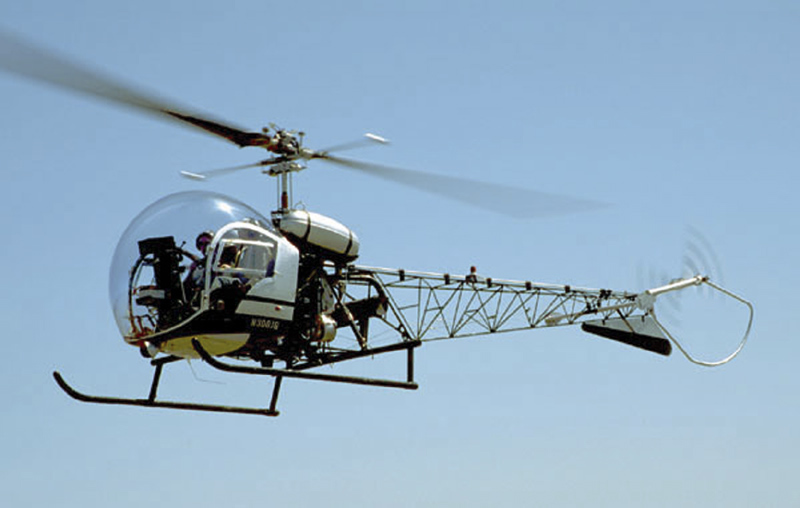
We had flown for about 25 minutes, and I had been introduced to hovering autorotations and later touch-down autorotations from about 500′ above the ground. Let me tell you about autorotations. If the engine quits or must be shut down to idle or off, the pilot will then need to autorotate. As the name implies, autorotation is initiated when the rotor blades are allowed to rotate freely after the automatic clutch disengages the powerplant driving them. The descending helicopter keeps those blades turning by lowering the collective rapidly to the bottom, producing negative pitch. That negative pitch, passing through the rotors in descent, keeps the blades turning, because you’ll need that rpm when you’re ready to land, and you will land one way or another. If the helicopter could not autorotate, many of us would have had spectacular, non-survivable crashes during our careers. The Hollywood version of helicopters being shot down and crashing because the engine was hit or the cockpit electrical system is damaged is mostly bullshit. Helicopters rarely fall out of the sky if the pilot can enter autorotation. I’ve had to autorotate 7 times to save my life and, incidentally, save the passengers and crew members if there were any in the aircraft.
Practicing autorotations generally works like this. The instructor demonstrates autorotation from any altitude they feel comfortable with, usually based on the lesson and/or the student pilot’s experience and proficiency. Sounds pretty dull, but the actual event is not.
Our autorotations began about five hundred feet above the ground. I followed Steve lightly on the dual controls as he talked me through. The throttle was rolled back to idle, and he lowered the collective. Keeping the nose straight by pushing the right tail rotor pedal in, lowering the nose slightly, we began to descend more rapidly than I was used to. My stomach contents had slurped up and were gradually catching up to the rest of things. For a skydiver, this was still more eye-opening than I expected. We were flying at about 60 miles per hour on the airspeed indicator, and even as a newbie, I knew trying to land like this would kill us. Steve began flaring the helicopter as we approached the airport ramp. The rotor rpm increased slightly, he leveled the helicopter by pushing the nose over, and since most of our forward speed had nearly stopped in the flare, we were back in a hover. He used the remaining rotor RPM to cushion the landing by pulling the collective, and we touched down. The collective was lowered, and the blades were turning at idle, now driven by the engine. “How cool is that?” I said! Steve and I did a few more autorotations.
I had been allowed to perform the last two autorotations to the ramp area in front of the airport coffee shop. With small inputs and advice, I had managed to place the helicopter skid side down on the ramp “without any drama.” His words. He sat for a moment, cast a look my way, and then told me why we had been doing practice autorotations.
“Just in case the engine quits” he said, “I want you to be able to get this helicopter on the ground without killing yourself.”
“OK,” I said.
“Now look,” he added, “I am going to go grab a coffee. You go around a couple of times, I’ll jump back in, and we will head out and do some pinnacle landings.” Steve slid himself out the door, leaned back in, and shouted over the engine noise, “And don’t friggin kill yourself.”
Good advice always, I thought. About the same point as the previous two flights, I lined myself up at 60 mph and sort of 500′ and rolled the throttle to idle as I lowered the collective. From a few years of skydiving experience, I could quickly see that my current glide slope was going to carry me a little farther along the ramp past the coffee shop. Oh well. I landed ok. Here goes number two. I climbed out, determined to correct my previous error by putting the aircraft on a steeper glide slope. My parachuting experience had taught me that when you need to get on a steeper glide slope, you drop the nose. It was working on this next autorotation, but as I had suspected, the airspeed had climbed as well. I was at a good approach angle to touchdown near my instructor, who was jogging back to the spot I had departed from originally.
When I began my flare, I could see that the increased airspeed would be a problem. I leveled the aircraft and pulled some collective to cushion the landing. My touchdown speed was such that I skidded a few feet past the instructor, but amazingly, he was in the door and seated almost before I had completely stopped.
I won’t relate all of what Steve said to me when he caught his breath. The most encouraging thing he had to say was that while I ‘apparently lacked the basic sense to understand simple instructions’, I was indeed brilliant enough to be a helicopter pilot. My solo was never logged as such. A couple of flight hours later, I did an “official” solo. My fellow students congratulated me for soloing so early, and I bought the beer that evening.
Does the student understand the task to be performed? Well, my instructor’s last instruction had been to not kill myself.
So far, so good.




 Helicopter Pilot, will travel